“The beauty of farmstead cheese is that every batch is a little bit different,” says Kevin Dietzel of Lost Lake Farm’s cheesemaking process. ”Seasonality and different pastures affect the flavor of all our cheeses.”
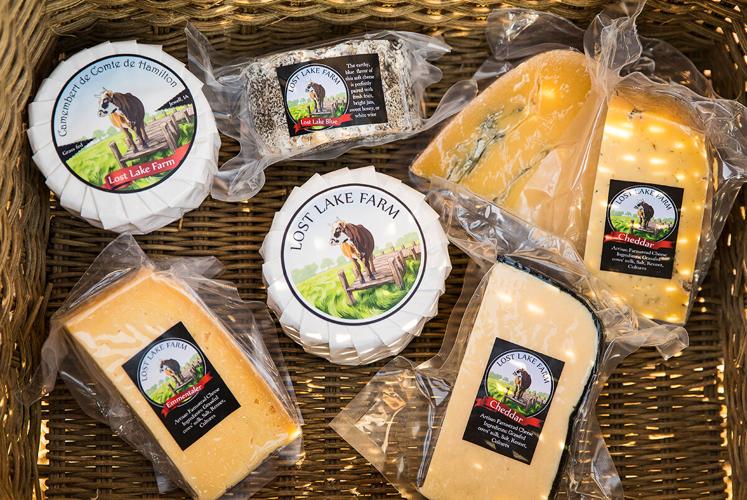
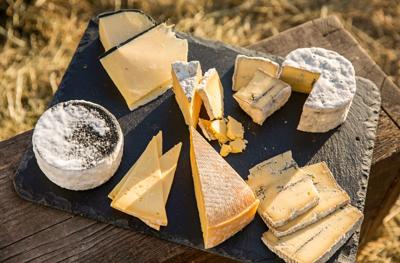
Lost Lake Farm's wide selection of cheese include Camembert, Emmentaler, Cheddar and Lost Lake Blue.
Based in north-central Iowa, about an hour north of Des Moines, Lost Lake Farm employs regenerative and ecological farming practices with their 80-acre farm and 20 dairy cows.
A full-forage farm, the healthy, natural diet of the farm’s cows contributes to Kevin’s and his wife Ranae’s award-winning artisanal cheeses.
Seasonality and the natural diet of the cows create slight variances and some delicious diversions in Lost Lake Farm’s cheeses. And although cheesemakers like the Dietzels might tweak their technique slightly to account for changes in milk and the type of cheese they’re making, the core process remains essentially the same.
As Kevin prepares a new batch of Lost Lake Blue, he shares his basic step-by-step approach:
1. Milk preparation and pasteurization:
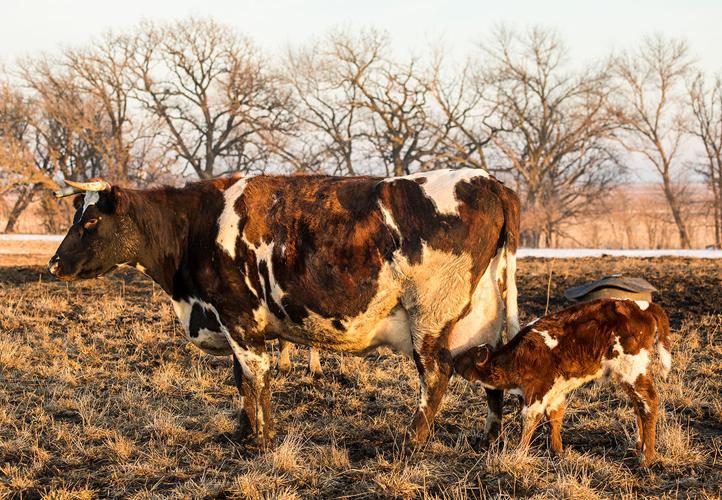
Beloved members of the Dietzel's herd, calves are weaned much later than at standard dairy farms.
The schedule of milking plays a big role in how often Kevin makes cheese; he needs about 50 to 100 gallons of milk for one batch of cheese, which is roughly what the farm collects in three to five days of milking. “Our average milk production is 12.8 pounds per cow, per day—after what the calves drink. That’s about one and a half gallons,” says Kevin. “This is well below most dairy farms due to our once-a-day milking, calves nursing on the cows and no grain feeding,” he adds.
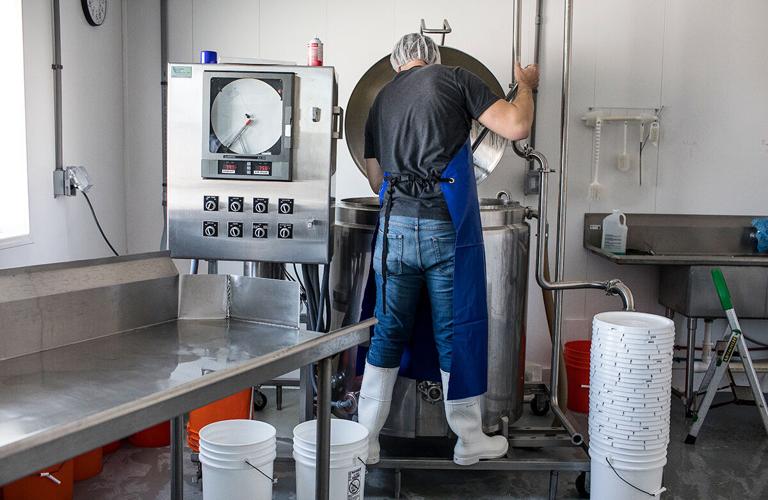
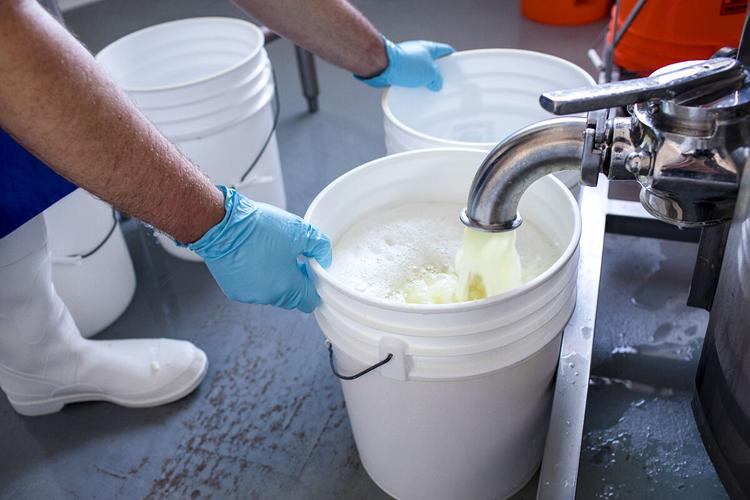
To begin the cheesemaking process, Kevin initiates transferring the milk from a refrigerated milk tank via a pipe into a cheese vat. Once in the cheese vat, the raw milk is gently heated through a low temperature process until it is pasteurized.
2. Fermentation and acidification:
Cultures are added to the milk to promote fermentation. Many cheesemakers, like Lost Lake Farm, use freeze-dried cultures for this stage; it’s the only way for a small producer to get the same reliable microbial strains in each batch. “While we could use the bacteria present in the milk to culture our cheese, there are some types of cheese we could never make,” explains Kevin. This is especially true for the moldy cheeses, like Lost Lake Farm’s Burrnt Oak, Camembert and Lost Lake Blue varieties. “There are some [dairies] using traditional methods of culturing cheese, but on a commercial scale—even at our micro-scale—this is challenging, and in many cases would not be allowed by our inspectors,” Kevin says.
An important first step, no matter the type of cheese being made, acidification also prevents bad bacteria from growing during the cheesemaking process.
3. Coagulation:
Still very much a liquid, the enzyme rennet is added to acidified milk, transforming it into a semisolid, similar to the consistency of Jell-O. In this step, the curds, or the protein solids, are beginning to separate out from the whey, which is liquid. “This is the first real magical step in the process of turning milk into cheese,” says Kevin.
4. Cutting the curd:
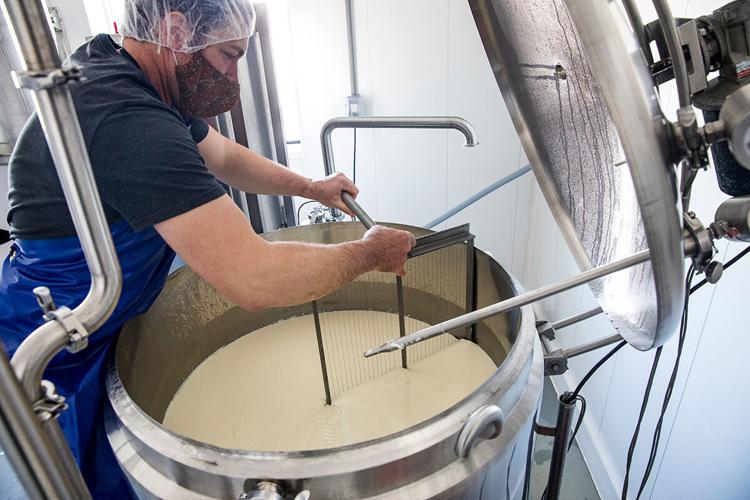
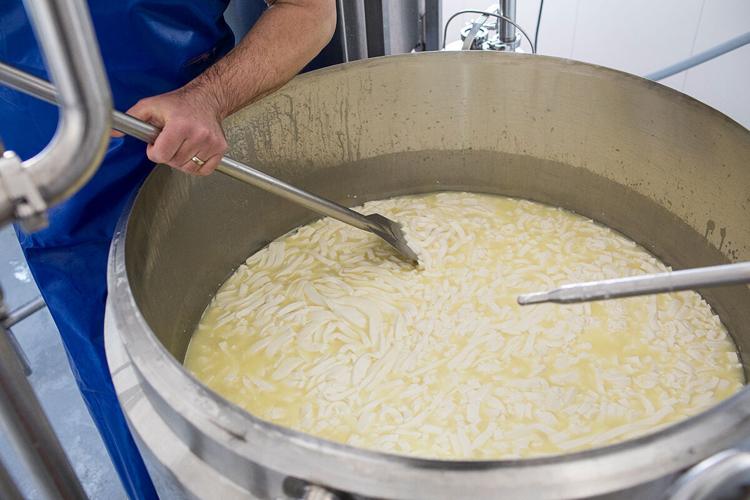
As the curds and whey continue to separate and ferment in their vat, a long knife or special curd-cutting tool called a cheese harp (much like a handled window screen with wider cross-hatching) is used to separate the curd into squares. The size of the curd will be different depending on what type of cheese is being made. But the goal is the same: To create more surface area for continued drainage of the whey.
Kevin cuts the curd with a device called a cheese harp.
5. Processing the curd and draining the whey:
Cut curds are cooked, stirred and washed, a process that continues to separate curds and whey. For a drier cheese, like a Cheddar, more time is spent in this step cooking and stirring. Softer cheeses, like Camembert, are barely processed or cut at all.
If salt was not added directly to the curd prior to processing, the cheese may be dry-salted during this step. Sometimes, if making wheeled cheese, the molded cheese is brined or rubbed with salt. Herbs may also be added at this stage to further enhance the flavor of the cheese.
7. Shaping:
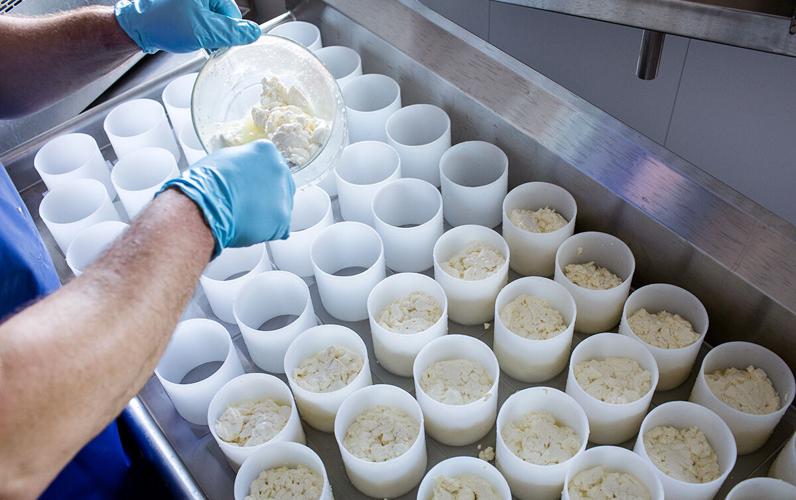
After the cheese is fully drained, salted and seasoned, additional shaping and molding take place. Cheese may be pressed under weights or wrapped tightly in cloth to expel any remaining liquid.
Kevin transfers the curds into molds which give each variety its distinctive shape.
8. Aging and packaging:
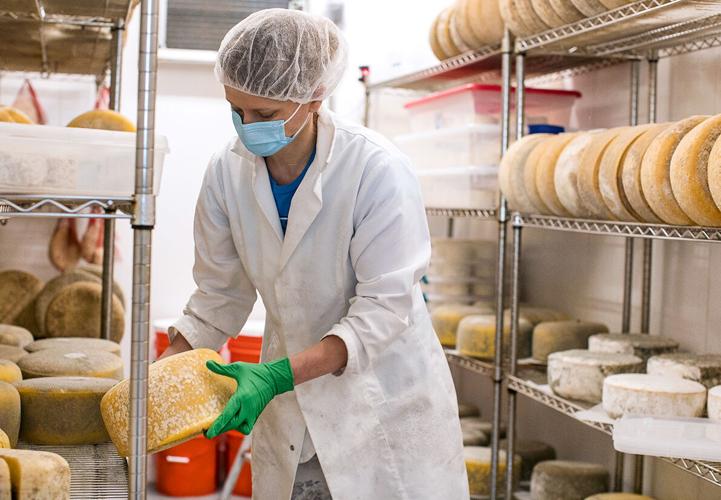
Finally, the cheese is finished or aged. For some cheeses, ambient molds are added during aging process which lend additional flavor to the cheese. The amount of aging prior to packaging depends on the type of cheese. For example, Lost Lake’s Burrnt Oak, a Morbier-style cheese, is generally six to eight weeks old at the time of sale, but the Iowa Alpine is six to 12 months old.
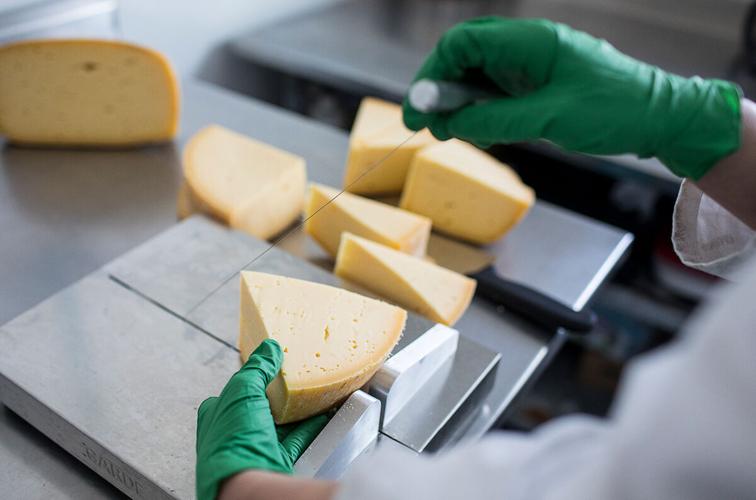
After the aging process, the cheese is cut and packaged for restaurants, farmers' markets, CSAs, and online orders.
After draining and preparing this batch of Lost Lake Blue, Kevin will move the cheese to plastic bins while they age to prevent the blue mold that’s developing from getting into other cheeses. He’ll open the containers every few weeks to pierce and flip the cheese to encourage blue mold growth and create that beautiful veining distinctive to blue cheese. Then, the Lost Lake Blue will be packaged and sold, gracing cheese plates across Iowa and beyond.
Keep it Clean. Please avoid obscene, vulgar, lewd,
racist or sexually-oriented language. PLEASE TURN OFF YOUR CAPS LOCK. Don't Threaten. Threats of harming another
person will not be tolerated. Be Truthful. Don't knowingly lie about anyone
or anything. Be Nice. No racism, sexism or any sort of -ism
that is degrading to another person. Be Proactive. Use the 'Report' link on
each comment to let us know of abusive posts. Share with Us. We'd love to hear eyewitness
accounts, the history behind an article.


(0) comments
Welcome to the discussion.
Log In
Post a comment as Guest
Keep it Clean. Please avoid obscene, vulgar, lewd, racist or sexually-oriented language.
PLEASE TURN OFF YOUR CAPS LOCK.
Don't Threaten. Threats of harming another person will not be tolerated.
Be Truthful. Don't knowingly lie about anyone or anything.
Be Nice. No racism, sexism or any sort of -ism that is degrading to another person.
Be Proactive. Use the 'Report' link on each comment to let us know of abusive posts.
Share with Us. We'd love to hear eyewitness accounts, the history behind an article.