If you crave a chewy bagel but don’t live near a bagel shop, consider baking your own.
Experienced bread baker, culinary instructor, chef and writer Summer Whitford shares, “The secret to a bagel’s chewy texture is the boiling step — the longer you let the bagel boil, the chewier and thicker the crust, but 30 seconds on each side is its sweet spot.”
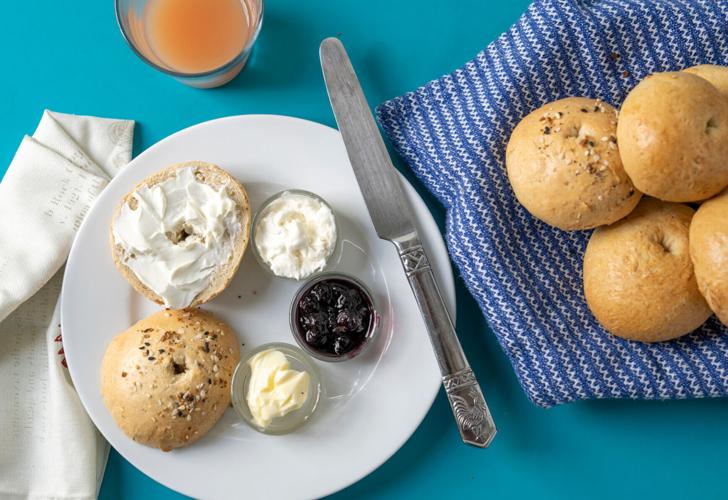
Although Whitford knows it isn’t traditional, she enjoys her bagels for egg sandwiches or toasted dark with a schmear of cream cheese.
Bagels
Yields: 8 to 10
1 cup whole or 2% milk
4 Tbsp unsalted butter
2 Tbsp granulated sugar
¼ oz active dry yeast
1 extra-large egg, separated
1 tsp sea salt
3½ cups bread flour
unbleached all-purpose flour for dusting
nonstick cooking spray
1 tsp cold water
bagel toppings such as kosher salt, sesame or poppy seeds, pepitas, rolled oats or grated Asiago cheese (optional)
In small saucepan, heat milk to boiling; remove saucepan from heat. Add butter and sugar; stir until butter melts. Transfer milk mixture to mixing bowl for heavy-duty mixer; cool until 90 to 100°F.
With whisk, stir yeast into milk mixture; let stand about 10 minutes or until a frothy sponge forms.
Add egg white and salt to milk mixture. Attach dough hook attachment to mixer and secure bowl. With mixer on low speed, gradually add bread flour and beat just until a smooth, soft dough forms.
Increase speed to medium. Knead dough until smooth and no longer sticky. Form dough into a ball. Place dough in large bowl sprayed with nonstick cooking spray. Cover dough with plastic wrap sprayed with cooking spray and leave in a warm place (about 75°F) about 1 hour to rise and nearly double in size.
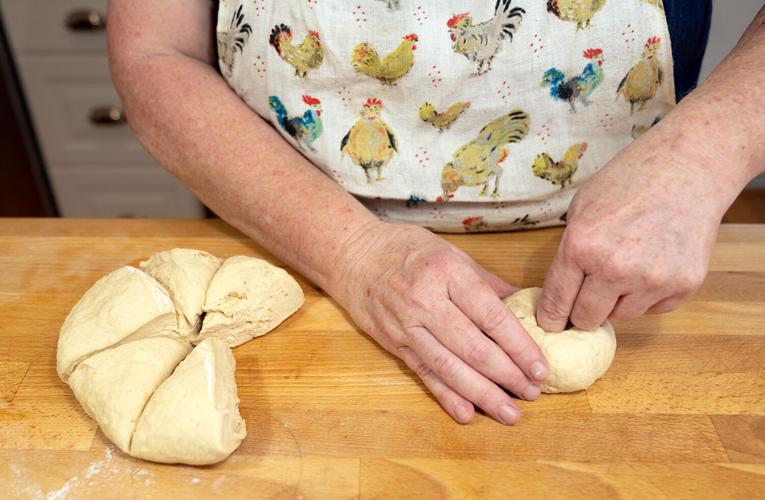
Lightly dust work surface with all-purpose flour. Divide dough into 8 to 10 pieces, each about the size of a small lemon; shape each piece into 4-inch rounds. Place finger into center of each round of dough until it reaches the work surface; move and twirl finger in a circle to widen the hole until it is about one-third the width of the bagel's diameter.
Transfer bagel rounds to cookie sheets; cover with damp cloth. Let stand about 10 minutes to puff slightly. Meanwhile, fill 4- to 6-quart saucepot of water halfway; heat to boiling. Preheat oven to 400°F. Spray 2 cookie sheets with nonstick cooking spray; set aside.
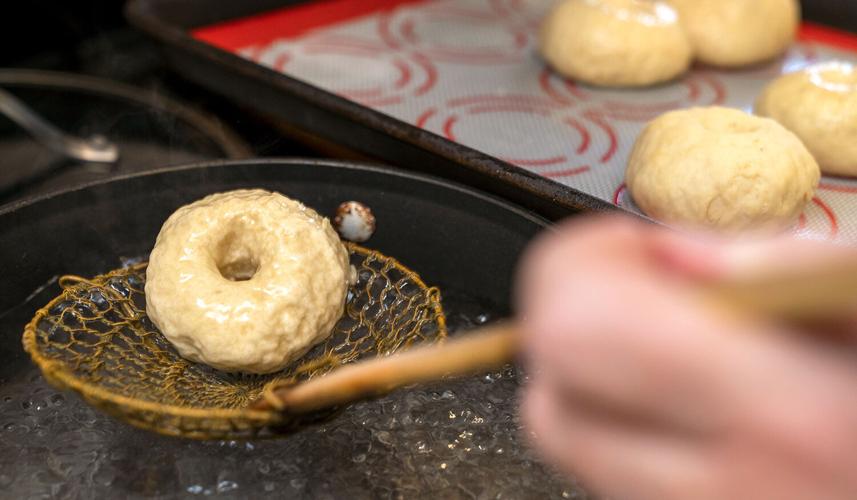
Carefully place each bagel round, 1 at a time, into boiling water; boil about 30 seconds or until it puffs. With spider-style skimmer strainer or slotted spoon, flip dough and boil 30 seconds longer. Overboiling will make the bagel break up, lose its shape, and it may split or crack during baking. With strainer, remove each bagel from water, allowing excess water to drip into saucepot; transfer to greased cookie sheet. Repeat with remaining bagel rounds.
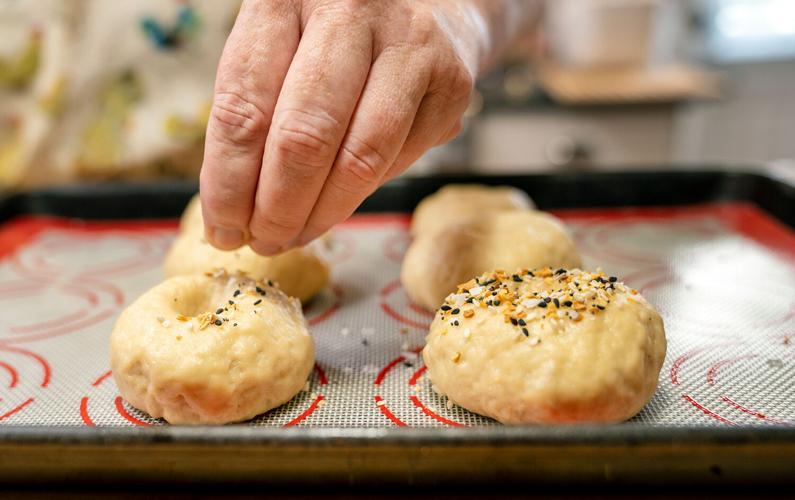
In cup, with fork, mix egg yolk and water until well mixed. Brush egg mixture on top of bagels. If using, sprinkle top of bagels with desired toppings. Bake about 20 minutes or until bagels are brown with a crisp top. Transfer bagels to wire cooling rack to cool slightly to serve warm, or cool completely to enjoy later.
Keep it Clean. Please avoid obscene, vulgar, lewd,
racist or sexually-oriented language. PLEASE TURN OFF YOUR CAPS LOCK. Don't Threaten. Threats of harming another
person will not be tolerated. Be Truthful. Don't knowingly lie about anyone
or anything. Be Nice. No racism, sexism or any sort of -ism
that is degrading to another person. Be Proactive. Use the 'Report' link on
each comment to let us know of abusive posts. Share with Us. We'd love to hear eyewitness
accounts, the history behind an article.


(0) comments
Welcome to the discussion.
Log In
Post a comment as Guest
Keep it Clean. Please avoid obscene, vulgar, lewd, racist or sexually-oriented language.
PLEASE TURN OFF YOUR CAPS LOCK.
Don't Threaten. Threats of harming another person will not be tolerated.
Be Truthful. Don't knowingly lie about anyone or anything.
Be Nice. No racism, sexism or any sort of -ism that is degrading to another person.
Be Proactive. Use the 'Report' link on each comment to let us know of abusive posts.
Share with Us. We'd love to hear eyewitness accounts, the history behind an article.