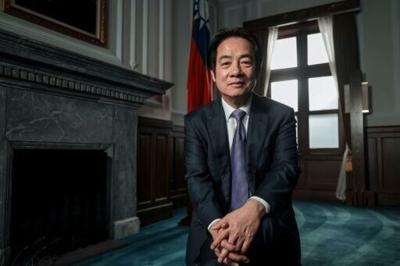
Taiwanese President Lai Ching-te on Saturday announced his arrival in Eswatini -- Taipei's only diplomatic ally in Africa -- after an earlier trip was cancelled when several countries revoked overflight permits.
Those various African nations withdrew overflight permission following "intense pressure" from Beijing, one of Lai's closest advisers said at the time, forcing cancellation of the initially scheduled April 22-26 trip.
Lai on Saturday said only that his initial visit had been "suspended due to unexpected external forces".
But "after days of secret arrangements by the diplomatic and national security teams, we arrived successfully today (Saturday)," he said in a Facebook post.
"I hope this trip will contribute to even deeper friendship between Taiwan and Eswatini, thanks to closer economic, agricultural, cultural and educational links, as well as promote Taiwan's international cooperation," he added.
In response to Lai's trip, China's foreign ministry on Saturday accused him of making a "stowaway-style escape farce" that made him "an international laughing stock".
"No matter how the DPP authorities collude with external forces ... it is all in vain and cannot change the fact that Taiwan is part of China," an unnamed spokesperson said in a statement on the ministry's website, referring to Lai's party.
"We urge Eswatini and other individual countries to see clearly the general trend of history ... and not pull chestnuts out of the fire for a handful of 'Taiwan independence' separatists," the statement said.
Eswatini, a small enclave kingdom formerly known as Swaziland, is one of 12 countries that still recognise Taiwan. China has persuaded other nations to break diplomatic ties with the self-ruled island, which it claims as part of its territory.
Lai was due in Eswatini in April for the 40th anniversary of King Mswati III's accession to the throne, but cancelled the visit after the Seychelles, Mauritius and Madagascar revoked overflight permissions, "unexpectedly and without notice", according to his office.
str-fal-sam/rmb
Keep reading
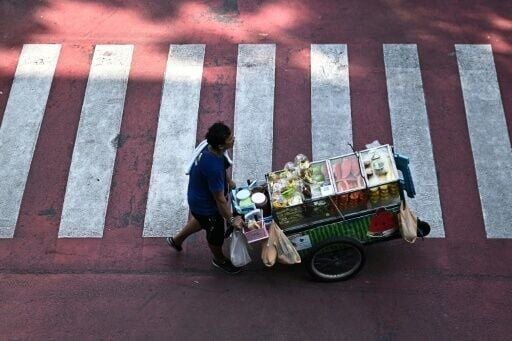
Across Bangkok, aromas of garlic, chilli and grilled meat drift from roadside stalls and carts, but tighter controls on vendors threaten livelihoods and the street food culture that defines the Thai capital.

As global fuel markets reel from the Middle East war, motorists in Nepal are increasingly turning to electric vehicles, with high demand putting a strain on dealerships.
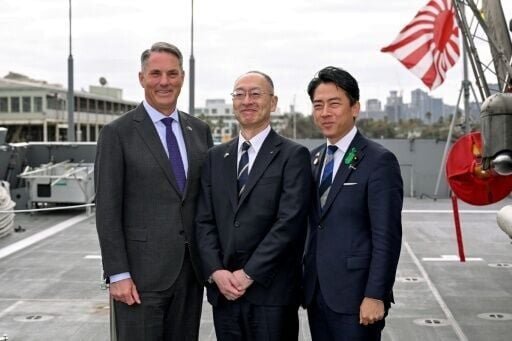
Long-pacifist Japan has shed its self-imposed ban on lethal weaponry exports, gunning for a prominent place in the global defence trade -- a challenging feat that analysts say could take years to achieve.



(0) comments
Welcome to the discussion.
Log In
Post a comment as Guest
Keep it Clean. Please avoid obscene, vulgar, lewd, racist or sexually-oriented language.
PLEASE TURN OFF YOUR CAPS LOCK.
Don't Threaten. Threats of harming another person will not be tolerated.
Be Truthful. Don't knowingly lie about anyone or anything.
Be Nice. No racism, sexism or any sort of -ism that is degrading to another person.
Be Proactive. Use the 'Report' link on each comment to let us know of abusive posts.
Share with Us. We'd love to hear eyewitness accounts, the history behind an article.