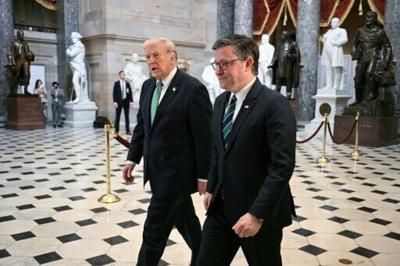
The battle for control of the US Congress entered its final six months on Sunday, with midterm elections in November that could reshape President Donald Trump's second term and redefine the balance of power in Washington.
As ever, the midterms will be a referendum on the president, with Democrats hoping to capitalize on economic discontent and Trump's sliding approval ratings to retake the House of Representatives and Senate -- while Republicans fight to defy political headwinds.
At stake is not just legislative control but the trajectory of Trump's agenda, with a Democratic-run Congress able to launch investigations, block nominees and generally complicate the remainder of his presidency.
Early indicators point to a challenging environment for Republicans, with Trump's approval rating around 40 percent and economic dissatisfaction -- particularly inflation and Iran war-related costs -- eroding confidence.
Polling shows Democrats with a narrow edge on the generic ballot, while some surveys suggest voters now trust them more on the economy.
A Republican-aligned group, AFP Action, warned the party's Senate majority was "at risk," citing "structural headwinds" and disengaged voters.
In midterm elections, Americans vote to fill all 435 House seats, about one-third of the 100-member Senate and most governorships. Democrats need to flip three House seats and four in the Senate to take control.
"The Senate is on the table here," Molly Murphy, of pollster Impact Research, told cable network MS NOW, pointing to Trump's waning popularity and strong Democratic turnout in recent elections.
"When the president's approval rating is at or below 40 percent, that is when you start to see these deeper pickups in much more Republican-heavy terrain."
Still, the landscape remains fluid, with structural challenges for both parties.
- 'Always tough' -
Republicans benefit from a favorable Senate map, with Democrats needing to win in states Trump carried. And heavily gerrymandered districts -- as well as a shrinking number of competitive seats -- limit how far a national swing can translate into House gains.
The campaign has been further complicated by a fierce redistricting battle, with states including Texas, California, North Carolina, Ohio, Florida, Missouri, Utah and Virginia pursuing new mid-decade voting maps.
The overall impact of the changes -- alongside a Supreme Court ruling limiting race-based redistricting -- remains unclear.
Republicans are banking on financial advantages and voter concerns over immigration and national security, while Democrats are focusing on cost-of-living pressures and framing the election as a defence of democratic norms.
Ahead of the six-month mark, Senate Democratic leader Chuck Schumer accused Republicans of undermining voting rights through pushes for over-zealous election security and immigration enforcement initiatives.
"Let's call it what it is: an effort to rig the system," he said.
For Republicans, the central challenge remains the president himself. Midterms typically punish the party in power, and Trump's weak approval ratings have heightened concerns.
At the same time, even some of his supporters say his focus on foreign policy, particularly the war with Iran, has drawn attention away from domestic economic concerns that typically dominate midterm campaigns.
Even so, Republicans insist the race is far from settled, noting that political conditions can shift rapidly ahead of an election.
House Majority Leader Steve Scalise told CNBC that Republican prospects would depend on turnout and voters appreciating his party "delivering what we've delivered to finally start turning this mess around that we inherited a year and a half ago."
"Midterms are always tough for the incumbent party, but this is not your father's Democrat Party," Scalise said.
ft/mlm
Keep reading

Latin pop queen Shakira delighted crowds of two million that packed Rio's famed Copacabana beach under a full moon Saturday, delivering fan-favorite hits and words of love for Brazil.
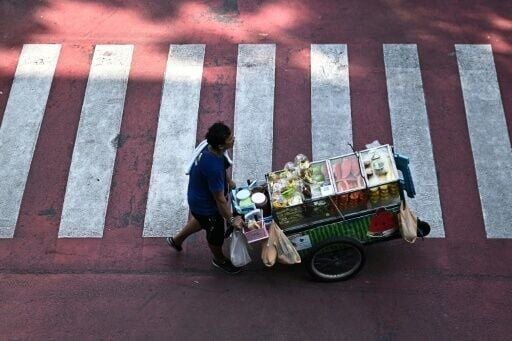
Across Bangkok, aromas of garlic, chilli and grilled meat drift from roadside stalls and carts, but tighter controls on vendors threaten livelihoods and the street food culture that defines the Thai capital.
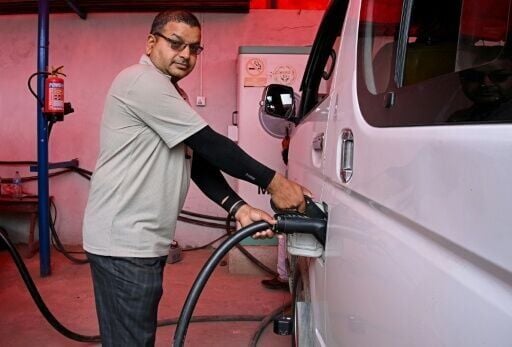
As global fuel markets reel from the Middle East war, motorists in Nepal are increasingly turning to electric vehicles, with high demand putting a strain on dealerships.



(0) comments
Welcome to the discussion.
Log In
Post a comment as Guest
Keep it Clean. Please avoid obscene, vulgar, lewd, racist or sexually-oriented language.
PLEASE TURN OFF YOUR CAPS LOCK.
Don't Threaten. Threats of harming another person will not be tolerated.
Be Truthful. Don't knowingly lie about anyone or anything.
Be Nice. No racism, sexism or any sort of -ism that is degrading to another person.
Be Proactive. Use the 'Report' link on each comment to let us know of abusive posts.
Share with Us. We'd love to hear eyewitness accounts, the history behind an article.