(The Center Square) - More than three-quarters of American voters say high gas and fuel prices have dealt a direct blow to their household finances, according to a new opinion poll.
A 61% majority of registered voters said they are “very concerned” by recent high fuel price increases while 25% of respondents are “somewhat concerned,” according to The Center Square Voters' Voice Poll, a survey conducted June 1-4 by Noble Predictive Insights, a nonpartisan polling firm. Another 9% of respondents said they are “not too concerned” by the recent fuel price increases and 3% are “not at all concerned,” the data shows.
Americans could soon get relief from high prices at the pump, however, after an announcement Monday of a 60-day ceasefire in the U.S.-Israel war with Iran, energy market experts say.
The survey data shows the level of anxiety over fuel costs is similar across age groups, with those saying that they are either “very concerned” or “somewhat concerned” ranging between 84% for young adults to 87% of respondents 65 years of age and older.
The poll was conducted at the launch of the summer driving season, when U.S. fuel demand is at the annual peak. While the survey data shows concern over fuel prices spans all ages and demographic groups, approximately two-thirds of the respondents said the issue will directly influence their votes in Novembers midterm elections.
“Average gasoline prices fell in 47 states over the last week, with the national average dropping below $4 per gallon late Sunday for the first time since mid-April,” Patrick De Haan, head of petroleum analysis at GasBuddy, told The Center Square. “The decline came as oil prices moved sharply lower in reaction to news of a potential deal between the United States and Iran, though it remains to be seen whether the agreement will hold.”
Among voters identifying as Republican, 49% said they are very concerned by gas and fuel costs compared to 72% of those who say they are Democrats. Among voters identifying as Independent, 58% said they are “very concerned” about fuel costs, with 72% reporting a direct budget strain, and 56% indicating the issue will influence their vote, the polling data shows.
The polling firm surveyed 2,585 registered voters nationwide through opt-in online panels and text-to-web cellphone messages, compiling data from 1,013 Democrats, 915 Republicans, 297 self-identified Independents, and 360 respondents with no party affiliation.
Women expressed higher overall concern about fuel prices than men, with 89% of females saying they are either “very concerned” or “somewhat concerned” while 83% of men did so.
Minorities are most acutely stressed by rising fuel costs, with 69% of Hispanic or Latino respondents and 64% of Black respondents saying they are "very concerned."
Respondents who cast ballots for Democrat Kamala Harris said high fuel costs are creating financial strain, with 45% of these registered voters saying their household budgets are impacted "a great deal." Meanwhile, 34% of Donald Trump voters reported the same elevated level of financial strain.
Geographically, voters in the West are the most stressed, with 66% indicating they are "very concerned" about rising fuel costs and 45% saying the prices hit their household budgets "a great deal."
The anxiety level registers at 61% in the South, with 41% of voters saying they are experiencing a "great deal" of financial impact. In both the Midwest and Northeast, an identical 38% of respondents say they are experiencing a "great deal" of financial strain.
The financial strains are being felt the most intensely by lower-income households – 48% of whom report a "great deal" of impact from higher fuel costs compared to 31% of high-income households.
The Center Square Voter’s Choice Poll carries a margin of error of +/- 1.93%.
(The Center Square) - Voters in Colorado’s 1st Congressional District will consider tax policies and affordability concerns as they head to the polls on June 30.
(The Center Square) – Minnesota's special districts reported $5.4 billion in outstanding long-term debt in 2023, while increasingly relying on state funding as pandemic-era federal aid declined.
Keep it Clean. Please avoid obscene, vulgar, lewd,
racist or sexually-oriented language. PLEASE TURN OFF YOUR CAPS LOCK. Don't Threaten. Threats of harming another
person will not be tolerated. Be Truthful. Don't knowingly lie about anyone
or anything. Be Nice. No racism, sexism or any sort of -ism
that is degrading to another person. Be Proactive. Use the 'Report' link on
each comment to let us know of abusive posts. Share with Us. We'd love to hear eyewitness
accounts, the history behind an article.
Democrats run against DeGette in Denver congressional race
(The Center Square) - Voters in Colorado’s 1st Congressional District will consider tax policies and affordability concerns as they head to the polls on June 30.
The district consists of Denver and is entirely contained within the city limits. U.S. Rep. Diana DeGette, D-Colorado, is seeking her 16th term in Congress but is being challenged by two other Democratic candidates in the primary election.
Melat Kiros, a former lawyer, and Wanda James, a business owner, are challenging DeGette for the Democratic nomination. Kiros, a Democratic Socialist, has sharply criticized DeGette’s tenure in Congress and vowed to defeat her.
"Establishment Democrats are beholden to the same billionaires who keep our prices high, burn our planet, and profit from a genocide. We can change that. It starts by changing who we send to Congress,” Kiros’ website reads.
Kiros did not respond to The Center Square’s request for an interview. She has advocated for Medicare for All, universal childcare and a U.S. arms embargo. Kiros immigrated to Denver in 1998 from Ethiopia.
“I’m interested in policies that expand our freedoms,” Kiros told Ballotpedia. “That includes the freedom to choose what we do for work, the freedom to travel freely, and the freedom to live and grow old with dignity.”
DeGette has pushed back against criticisms of her tenure and said she is a progressive candidate. She said she has supported Medicare for All and criticized other candidates for their lack of experience.
“It would be a very bad choice to pick somebody who has never served in Congress or a legislature,” DeGette said.
DeGette has pushed back against the Trump administration. She voted against the One Big Beautiful Bill Act and blocked funding for the U.S. Department of Homeland Security due to concerns over immigration enforcement throughout the last year.
“We need seasoned people who can fight for us in Washington, who can fight against Donald Trump’s illegal war, who can fight not just to defund but also dismantle ICE,” DeGette said. “We need someone who will be a leader in the next Congress when we take the majority.”
James, a marijuana dispensary owner and board member at the University of Colorado vying for the 1st Congressional District, has also been critical of DeGette. She has focused her campaign on expanding child tax credits, income tax credits and a “College for All” program that would provide tuition-free college for students in families that make less than $125,000 per year.
“I will fight in Congress for the same chance for every student,” James told Ballotpedia. "I will protect and expand Pell Grants, which open doors for students not born into wealth, ensuring college is accessible without lifelong debt.”
Christy Peterson is the lone Republican seeking to challenge DeGette in November. Peterson, who's running unopposed in the GOP primary and will be on the Nov. 3 ballot, told The Center Square she is focused on reducing crime in Denver and providing more funding for local police.
“I want to clean up our cities so crime and lawless behavior is removed and cannot return,” Peterson said. “Without the crime, businesses can once again return, our citizens and visitors can return to enjoy the cafes, restaurants, shopping and cultural experiences of inner city life again.”
Peterson has also applauded the Trump administration’s efforts to pursue fraud in federal programs. She called on further investigations and prosecutions of fraud in Medicare, Medicaid and Social Security.
“So-called ‘good’ programs are not helping people, they’re creating government dependency,” Peterson said.
Degette leadsfundraising efforts in the district with more than $975,000 in campaign contributions, according to the most recent Federal Election Commission filings. She received $1,000 from the Johnson and Johnson Political Action Committee, $1,000 from Dominion Energy PAC and $2,500 from the Liberty Mutual Insurance PAC.
Kiros follows behind DeGette with morethan $376,000. She has vowed against taking donations from the American Israel Public Affairs Committee and other corporate PACs. James has morethan $234,000 and is the third-highest earner in the race.
Both Kiros and James have primarily received campaign contributions from small, individual donors. Ballotpedia classifies the Democratic primary in Colorado's 1st Congressional District as a "battleground race."
Polls are open from 7 a.m. to 7 p.m. on June 30, Election Day. For more information visit the Secretary of State’s website, coloradosos.gov/pubs/elections. Early election results will be published on that evening at www.thecentersquare.com/colorado.
Minnesota special districts report $5.4B debt, federal aid declines
(The Center Square) – Minnesota's special districts reported $5.4 billion in outstanding long-term debt in 2023, while increasingly relying on state funding as pandemic-era federal aid declined.
This is according to a new report from the Minnesota Office of the State Auditor.
The 91-page report examined 572 special districts that submitted financial data to the auditor's office. Special districts are local government entities created to provide specific services such as transportation, housing, public safety, watershed management, airports and economic development.
These entities receive taxpayer funding from local, state and federal governments, as well as revenue from taxes, charges for services, and special assessments.
'Minnesota Special Districts Finances' Report
The report found special districts generated $1.6 billion in governmental fund revenue in 2023, with state grants accounting for the largest share at 37%, followed by charges for services and taxes at 16% each and federal grants at 14%.
Christy John, a research analyst intermediate for the auditor’s office, said one of the most notable trends was a decline in federal and local grants following the expiration of COVID-era funding programs.
“All local governments received federal funding related to the pandemic era,” John told The Center Square. “In 2023, the federal and local support is falling. That’s normal.”
From 2022, federal grants declined 16%, or $42 million, while local grants fell 28%, or $63.6 million. At the same time, state grants increased 23%, or $107.6 million, helping offset the reductions.
John said the decreases largely reflect the winding down of federal pandemic programs such as the Coronavirus Aid, Relief and Economic Security Act and the American Rescue Plan Act that infused large amounts of money into states and localities.
While governmental fund revenues increased overall from the previous year by 7%, special district enterprise operations reported significant operating losses. Enterprise funds are designed to function similarly to private businesses, covering costs primarily through fees and user charges.
According to the report, special district enterprise operations reported $2.2 billion in operating revenue and $3 billion in operating expenses, resulting in an operating loss of $825.8 million.
The Metropolitan Council, a Twin Cities regional planning organization, accounted for much of that deficit, posting $642.8 million in operating losses across four of its five enterprise operations. The only operation to not was environmental services.
However, those losses were largely offset by $1.4 billion in nonoperating revenue. That revenue included federal, state and local grants, and resulted in overall net profit of $177.4 million for the council and allowed special district enterprises overall to report a net profit of $369.1 million.
The report also found that four entities accounted for 80% of all special district long-term debt in Minnesota. The Metropolitan Council, Metropolitan Airports Commission, Western Minnesota Municipal Power Agency and Southern Minnesota Municipal Power Agency collectively held $4.3 billion of the $5.4 billion total.
John said the concentration of debt is not a sign of financial distress.
“It's generally consistent,” John explained. “These four entities carrying the large amount of long-term debt is mainly because they are responsible for financing, constructing, and maintaining main in large infrastructure projects across Minnesota.”
These large entities typically issue revenue bonds to finance major projects, then repay the debt over time through dedicated taxes, fees and other revenue sources, John said.
Although 572 districts reported financial information, the report found that revenue and spending are concentrated among a relatively small number of entities. Of the 412 districts reporting governmental fund revenue, just 33 accounted for 65% of all governmental fund revenue.
The Metropolitan Council, Three Rivers Park District and Southwest-West Central Service Cooperative alone accounted for 35% of total governmental fund revenue.
Government Funding
State Auditor Julie Blaha said the report highlights the importance of stable funding relationships among federal, state and local governments.
“Local government, their whole goal is to keep things steady,” Blaha told The Center Square. “Chaos out of the federal level . . . makes [long-term planning] really difficult.”
Blaha expressed concern that uncertainty surrounding federal funding could complicate funding and long-term planning for special districts.
“If the federal government decides to basically abdicate their role in all of this, it's going to have an impact, and it's going to be significant,” Blaha said.
She warned that if federal support declines, costs could shift to other funding sources.
“If a federal partner drops out, what you see is this starts to shift to property tax,” Blaha said. “That changes people’s day-to-day lives.”
John Jernberg, a research analysis specialist at the auditor’s office, hoped to assuage concerns about special districts potentially coming to rely too heavily on federal funding during the COVID era.
“They were making very conservative decisions on how they used that money, so that they won't be stuck with an ongoing bill,” Jernberg told The Center Square.
That said, Jernberg said he is concerned that residential property taxes could rise as declining commercial property values in Minnesota's largest cities place additional pressure on local governments to make up lost revenue elsewhere.
“The tax base paid by those largest buildings in St. Paul and Minneapolis whose value has gone down means something else has to pick that up,” Jernberg said. “It's going to be residential properties.”
Minnesota had 621 special districts required to report financial information in 2023, though 49 failed to comply with reporting requirements.
Blaha said the report serves as an important benchmark for tracking how special districts fund their operations and whether they can continue meeting long-term financial obligations, particularly as federal funding levels continue to fluctuate.
“The lesson of this report is that this relationship is really important,” Blaha said. “If that relationship changes, people are going to feel it.”
Federal panel proposes new definition for sports betting
(The Center Square) - Betting on a football score isn't gambling.
At least not according to the federal Commodities Futures Trading Commission.
The commission recently proposed rule changes to strengthen its governance over prediction markets and sports betting. The changes involve how the panel defines "gaming" and "gambling."
The proposal defines limitations for the CFTC's oversight of gaming, aimed at skill-based games but with limits on bets related to war and other extreme markets. The move is the latest development involving the CFTC at a time when the gambling industry opposes prediction markets in Nevada and elsewhere in the U.S. It's also a matter of jurisdictions: State gaming boards oversee casinos and gambling.
The CFTC’s extensive prediction markets proposed rule making from June 12 is the latest move in the argument over prediction markets and their place in the wider gambling world.
According to the CFTC's document about the rule changes, gaming is for recreational or entertainment purposes and exists within a set of rules, where the result is determined by the player based on skill, luck or otherwise.
Gaming, according to the CFTC proposal, is largely defined in contrast to contests and gambling.
“The Proposal defines gaming functionally and distinguishes games from contests such as elections and awards,” read the CFTC document. “Within gaming, the Commission aims to permit contracts settled on aggregate sports outcomes with objective data and integrity infrastructure, while prohibiting pure-chance games and high-risk sports-adjacent designs (e.g., injury, officiating-only, discrete actions, altercations, pre-collegiate events).”
The rule proposal would give CFTC the right to oversee bets made on sports scores and other gaming results. This is in contrast to what it defines gambling as, placing bets on contests like the Nobel Peace Prize or political events, as well as the more minute parts of sports – like what color Gatorade is poured on the Super Bowl winning coach.
The CFTC rules would also ban bets related to terrorism, assassination and war, which it argued would “present significant national security risks.”
Prediction markets have been criticized for offering betting lines on war and other controversial topics, such as a current betting line on Polymarket with over $600,000 in bets that asks, “Will Israel launch a major ground offensive in Gaza by …?” followed by a series of specific dates.
The CFTC said its new gaming definition is a public good, arguing it will increase regulation over prediction markets. The rules proposal gives any interested parties 45 days to comment on the changes, until July 27.
The CFTC did not respond to questions from The Center Square.
Historically, the CFTC has regulated markets for raw materials and agricultural goods, called commodity markets.
In the last couple of years the CFTC has overseen regulation of prediction markets as the industry has grown in popularity. Prediction markets, which offer betting lines between users on a variety of subjects from sports to political events, have pushed the limits of the CFTC’s authority, according to many within the traditional gaming industry.
“There’s no reason this should be regulated any different than people betting on the NFL,” Wayne Winegarden, a senior fellow at Pasadena-based Pacific Research Institute, previously told The Center Square. “You’d have to wonder why it would be.”
The American Gaming Association did not respond to questions on this story.
Nevada, along with many other states, has been through a series of lawsuits against prediction market companies, arguing the CFTC-regulated industry should be compliant with local gaming laws.
Illinois Venezuelans face economic 'double whammy'
(The Center Square) – An Illinois Venezuelan Alliance leader says inflation is a double whammy for members of his community.
Jose Morales, vice president of the IVA’s board of directors, said traveling to Venezuela is easier after the United States removed former President Nicolas Maduro in January.
Morales told The Center Square there is not yet reason for Venezuelans to return.
“A lot of people are not making plans of coming back when you have inflation of over 300% and there are no jobs and there are no services. As you have seen, electricity, health, and even food security is not right where it should be,” Morales told The Center Square.
Morales said inflation in the U.S. is complicating matters.
“It's a double whammy for Venezuelans here because the economy here is struggling, especially after the Iran crisis,” Morales said.
Morales said Illinois Venezuelans are working two or three jobs to support themselves and help their families in Venezuela.
Morales said there is a lot of caution among the Venezuelan people because the apparatus of Maduro’s regime is still in place.
“They are expecting changes. Of course, they don't happen overnight, but the expectation of further change is there, and it hasn't materialized on a plan that people are expecting to see, like when are we going to have elections?” Morales said.
Maduro’s former vice president, Delcy Rodriguez, is Venezuela’s acting president.
Morales said there has been bureaucratic improvement since the U.S. and Venezuela reestablished diplomatic relations.
The taxpayer impact of U.S. intervention in Venezuela remains unclear.
A U.S. Department of War official told The Center Square in April that total operational costs would be calculated after the operation concludes.
The War Department said President Donald Trump’s $1.5 trillion defense funding request for fiscal year 2027 represents a 42% increase over current funding levels.
HUD secretary discusses housing affordability during Michigan visit
(The Center Square) – U.S. Secretary of Housing and Urban Development Scott Turner visited Lansing this week to promote a number of affordable housing projects in mid-Michigan.
This comes as Michigan continues to struggle with rising housing costs and a shortage of inventory, which some have labeled a "crisis" for Michiganders.
Turner joined U.S. Rep. Tom Barrett, R-Michigan, for tours of several housing developments.
“Housing affordability is one of the biggest challenges working families are facing across mid-Michigan and the country,” Barrett said. “The solution isn't more bureaucracy—it's building more homes, expanding opportunities for homeownership, and making sure families can compete in the housing market.”
One of the tours included The Residences at Walter French, a low-income apartment complex developed inside a former Lansing school building.
Turner said this is an example of the importance of "public-private partnerships."
“Lansing is a powerful example of how public-private partnerships can drive meaningful economic growth and community revitalization,” Turner said. “Innovative construction practices and strategic investment through Opportunity Zones are helping increase housing supply and transform historically forgotten communities.”
Turner also met with local housing, business and government leaders to discuss ways to expand housing opportunities across the region, which they said should include continued taxpayer-funded federal housing spending.
“From retention of Community Development Block Grant dollars to funding for housing and homeless resources, federal investments are necessary for Lansing, and all cities, to be successful,” said Andy Schor, mayor of Lansing.
Following the visit, Turner applauded what he saw in Michigan.
“Mid-Michigan is leading the way,” he posted to social media. “Great visit . . . to see public-private partnerships expanding access to affordable housing. That is exactly what the Trump Administration promised to deliver—affordable housing and the American Dream within reach for every family.”
Amy Hovey from Michigan State Housing Development Authority was present as the state-level representative.
"Thank you to U.S. Department of Housing and Urban Development Secretary Scott Turner for touring Michigan this week to see the innovative solutions that are expanding housing opportunities and enhancing communities across the state," the authority said in a statement following Turner's visit. "It’s always valuable to come together with our federal partners to strengthen our collaboration, advance our shared mission, and continue making an impact for Michiganders."
State lawmakers from both sides of the aisle have advanced dozens of housing bills this year as housing availability and affordability remains a growing concern, both in Michigan and nationally.
Last month, Michigan House Republicans approved a package of bills they say would reduce housing costs by eliminating the state property tax, as previously reported by The Center Square.
Many other housing-related proposals continue to move through the state legislature.
Just this week, State Rep. Cam Cavitt, R-Cheboygan, testified before the House Regulatory Reform Committee in support of Michigan's First-Time Home Buyer Savings Program, which allows first-time homeowners to save for down payments through tax-advantaged accounts.
Meanwhile, the Republican-led House recently approved bipartisan legislation that would allow communities to permit certain multi-family housing developments with single-staircase designs.
Yet another proposal would prohibit large corporations from purchasing single-family homes if they already own significant housing portfolios.
“My legislation could not be clearer: corporations will no longer take advantage of our broken housing system for their own gain,” said State Rep. Karl Bohnak, R-Deerton and the bill’s sponsor. “By stopping these predatory practices, we’re ensuring that single-family homes on the market are available for the people who need them.”
Barrett is leading a similar push in the U.S. Congress.
Ohio’s social media parental consent law allowed to go forward
(The Center Square) – Calling it a win for families, Ohio’s new attorney general Friday praised a federal appeals court ruling that allows the state’s social media age verification law to take effect after sitting for more than two years.
Attorney General Andy Wilson praised the ruling that came down Thursday from a three-judge panel at the Sixth Circuit Court of Appeals in Cincinnati, ending an injunction.
Social media, gaming and other internet app companies will now be required to verify a user’s age and get parental consent for children under 16 years old to use a platform.
“This ruling is a win for Ohio families,” Wilson said in a statement. ““The court agreed that parents – not social media companies – should get a say in what kids see online. We have an obligation to keep our children safe, and today, the most dangerous place for our kids is the internet.”
In January 2024, an Ohio law that required social media operators and sites that sell things or provide a service to children to get parental consent before establishing accounts for children under 16 was supposed to take effect.
NetChoice, a trade group representing apps like Facebook, Instagram and TikTok, sued to stop the law and won an injunction that continues to stand as court battles are ongoing.
Chief U.S. District Judge for the Southern District of Ohio Algenon Marbley said in the ruling establishing the injunction that the law would bring financial harm to social media companies for compliance, noting those companies would face significant costs.
He also said the law’s language invited lawsuits by being “capacious and subjective.”
The federal appeals court panel disagreed.
“NetChoice has failed to establish that the act is facially unconstitutional,” the panel held.
It reversed a district court’s ruling and sent the case back to the district court with instructions to enter a judgment in favor of Ohio.
The state argued that the law was a “legitimate exercise of the state's prerogative to regulate contracting with minors,” and did not violate the First Amendment right to free speech.
The three-judge panel in its decision held that, “For young people, who are at a pivotal stage in cognitive development, social media has been linked to issues with sleep, anxiety, body dysmorphia, depression, and bullying.”
NetChoice did not immediately respond to a request for comment on Thursday’s ruling.
NetChoice claimed the law was unconstitutional because it “imposes blanket parental-consent requirements for minors to access and engage in all manner of protected speech across a wide swath of websites,”
One of the judges in the three-judge panel dissented.
“The First Amendment interests of NetChoice overlap neatly with the First Amendment interests of its members’ minor users,” Appeals Court judge Kevin Ritz wrote in a dissent.
Israel-Hezbollah agree to ceasfire, U.S. official says
(The Center Square) – Israel and Hezbollah agreed to a ceasefire on Friday, a U.S. official confirmed to The Center Square.
Overnight, 18 people were killed in Lebanon amid strikes between Israel and Hezbollah, the Lebanon Health Ministry said. Four Israeli soldiers were also killed, according to the Israeli military.
A U.S. official confirmed on background that Israel and Hezbollah agreed to the ceasefire. The overnight attacks, first by Hezbollah and countered by Israel, appeared to stall peace talks between the United States and Iran.
Vice President JD Vance delayed a planned trip to Switzerland that was set to include discussions of Iran's nuclear program. The first article in a memorandum of understanding between Iran and the U.S. calls for an end to the fighting in Lebanon between Israel and Hezbollah.
The memorandum sets out a 60-day ceasefire for negotiations to continue on the future of Iran's nuclear program, and set up a $300 billion reconstruction fund for Iran.
Israeli Prime Minister Benjamin Netanyahu previously vowed to retaliate after the four Israeli soliders were killed.
"Israel will remain in the security zone in southern Lebanon for as long as required to protect the settlements in the north," Netanyahu said before the ceasefire was announced.
The terms of the Israel-Hezbollah ceasefire are unclear. The ceasefire's effect in ongoing negotiations between the United States and Iran is also unclear.
Wisconsin senator wants to reinstitute race-based scholarships via zip code
(The Center Square) - A Wisconsin state senator is pledging to make changes after a Thursday Wisconsin Supreme Court ruling that a minority scholarship aid program was unconstitutional.
Wisconsin Sen. Dora Drake, D-Milwaukee, said that she intends to introduce a bill that will restart the grant program for students based on income and zip code instead of the qualifications in the program since it began in 1985, including those who are “Black American,” “American Indian,” “Hispanic” or a former citizen of Laos, Vietnam or Cambodia who entered the country in 1976 or later.
Drake received the scholarship while she attended Marquette. The program awarded between $250 and $2,500 per year to students. The scholarships went to private college and technical college students.
The Wisconsin Supreme Court ruled that the program violated the Equal Protection Clause in the 14th Amendment. The case was filed by filed by six taxpayers against the Wisconsin Higher Educational Aids Board and Executive Secretary Connie Hutchinson, who was in charge of administering the grants.
The ruling was based on precedent from a 2023 U.S. Supreme Court ruling.
“That federal case was based on admissions while this program is about a student retention enacted by the state legislature and funded since 1985,” Drake, Chair of the Wisconsin Legislative Black Caucus, said in a statement. “They are setting a dangerous precedent by applying this federal ruling to distinctly different programs.”
Sen. Eric Wimberger, R-Gillett, applauded the ruling and said that it showed that a bill he sponsored, Assembly Bill 669, was the right move because it would have ended race-based scholarships in the state. That bill was vetoed by Gov. Tony Evers.
“Giving benefits based solely on race presumes someone has individual personal characteristics simply because they belong to a race category,” Wimberger said in a statement. “That is stereotyping and racism at their plainest and simplest.
“The Higher Education Aids Board could not identify to the Court any objectives or benefits it hoped to achieve through the policy. The Court is right today to call race-based government policies for what they are: odious.”
Wimberger vowed to continue to work to end other state programs that are solely based upon race because he wants to “pursue equality under the law.”
Drake said that the decision “emboldens an extreme conservative agenda” that hopes to end all protections and programs “to remove all disparities in America and secure a fair democracy for all.”
“We can’t continue to make the same mistakes like our nation did post reconstruction and Jim Crow if we do we will never achieve true equity in our democracy.” Drake said.
Drake called a constitutional amendment on the Nov. 3 statewide ballot “misleading.” The billt would prohibit Wisconsin governmental entities from giving preferential treatment based on race, sex, color, ethnicity or national origin. She said the programs are meant to eliminate disparities between those groups.
“Legislators like State Sen. Dora Drake benefitted from these programs, and now countless Black and Brown Wisconsinites won’t have the same opportunities because of the Supreme Court’s decision,” WisDems spokesperson Philip Shulman said in a statement. “Even worse is this decision will undoubtedly set the stage for more rulings that undercut similar programs and further disenfranchise Wisconsinites.
“This fight is not over, and I am confident we will see Democrats fight this ruling and continue to give every Wisconsinite the best chance possible to make a better life for themselves.”
Poll: Data center opposition more important than competition with China
(The Center Square) – American voters believe building more data centers in the United States are not worth the potential strain on local electricity, water and infrastructure and that the negatives outweigh the importance for national security and competing with China, according to a new poll.
The Center Square Voters’ Voice Poll found that 54% believe that data centers are not worth the strain while 29% said they believed that building more data centers in the United States is important for national security and competing with China.
The poll showed 17% were not sure.
The results come from a survey conducted by Noble Predictive Insights from June 1-4 and polled registered voters nationally via opt-in online panel and text-to-web cell phone messages. The sample included 2,585 respondents comprised of 915 Republicans, 1,013 Democrats, and 297 True Independents (Independents who, when asked if they leaned toward one of the major parties, chose neither). The margin of error is +/- 1.93%.
The poll was closest amongst those who voted for President Donald Trump, with 41% of Trump voters saying it is most important to compete with China and 44% believing that the costs are not worth the strain.
Among those who voted for Kamala Harris in the last presidential election, 63% said it was not worth the strain while 19% believed it was most important to compete with China.
Mike Noble, founder of Noble Predictive Insights, said that the idea that competing with China in artificial intelligence and data centers fell flat.
“I think that really goes back to that they haven’t done a good job with their messaging,” Noble said. “Even then, only 29% thought it was important for national security in that race with China.”
Foreign billionaires have provided funding upwards of $39 million to the anti-AI data center movement in the United States, according to an American Energy Institute report in April.
“The world we leave behind for our children and grandchildren will be a very dark one if a communist regime has technological dominance over the United States of America,” Founder, CEO and Chairman of State Armor Michael Lucci told The Center Square after the report.
Jason Isaac, CEO of the American Energy Institute, said that report showed that data center opposition is not “organic or purely local” and that transparency matters with what the report showed.
Here’s why Utah has become one of America’s surprising plastic surgery hot spots
Andy Larsen for The Salt Lake Tribune
Here’s why Utah has become one of America’s surprising plastic surgery hot spots
Billboards flank the freeway, encouraging you to “love thy selfie.”
Heather Gay, one of “The Real Housewives of Salt Lake,” estimates she’s spent $200,000 on cosmetic procedures.
Everywhere you look, it seems there are fuller lips, lifted faces and madeover mommies.
Yes, Utah has become a hot spot for plastic surgery.
But how hot? And why?
Surgeons, researchers and the data tell a fascinating story.
How much plastic surgery is there in Utah?
Maybe you’ve heard the claim that Utah leads the nation in plastic surgeries. But it’s hard to know how many cosmetic procedures are actually performed here.
The American Society of Plastic Surgeons compiles data by region, piling Utah into a Western cohort that includes all of the states from California to Colorado. That region does have the highest rate of plastic surgeries nationwide — but it’s hard to know if that’s due to Hollywood or Holladay
Overall, surgeons don’t like to share their data.
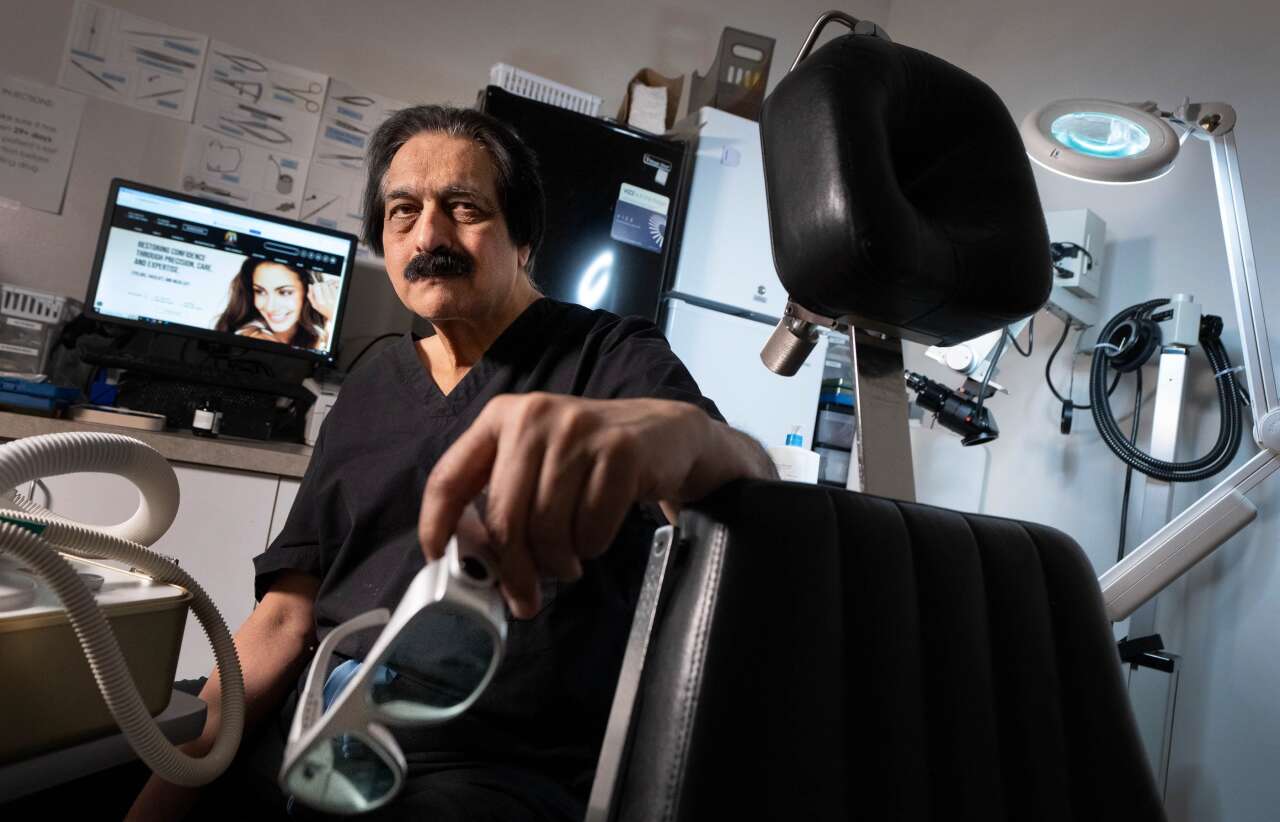
“They all have their own and everybody keeps their data secret because they don’t want other people to know,” Dr. Bhupendra Patel, a Salt Lake City facial surgeon, pictured below, told The Salt Lake Tribune.
Francisco Kjolseth // The Salt Lake Tribune Reply
So that question had to be answered via proxies. An obvious one is the number of plastic surgeons in any given area; the thinking being that if there’s more plastic surgery somewhere, there are likely to be more plastic surgeons.
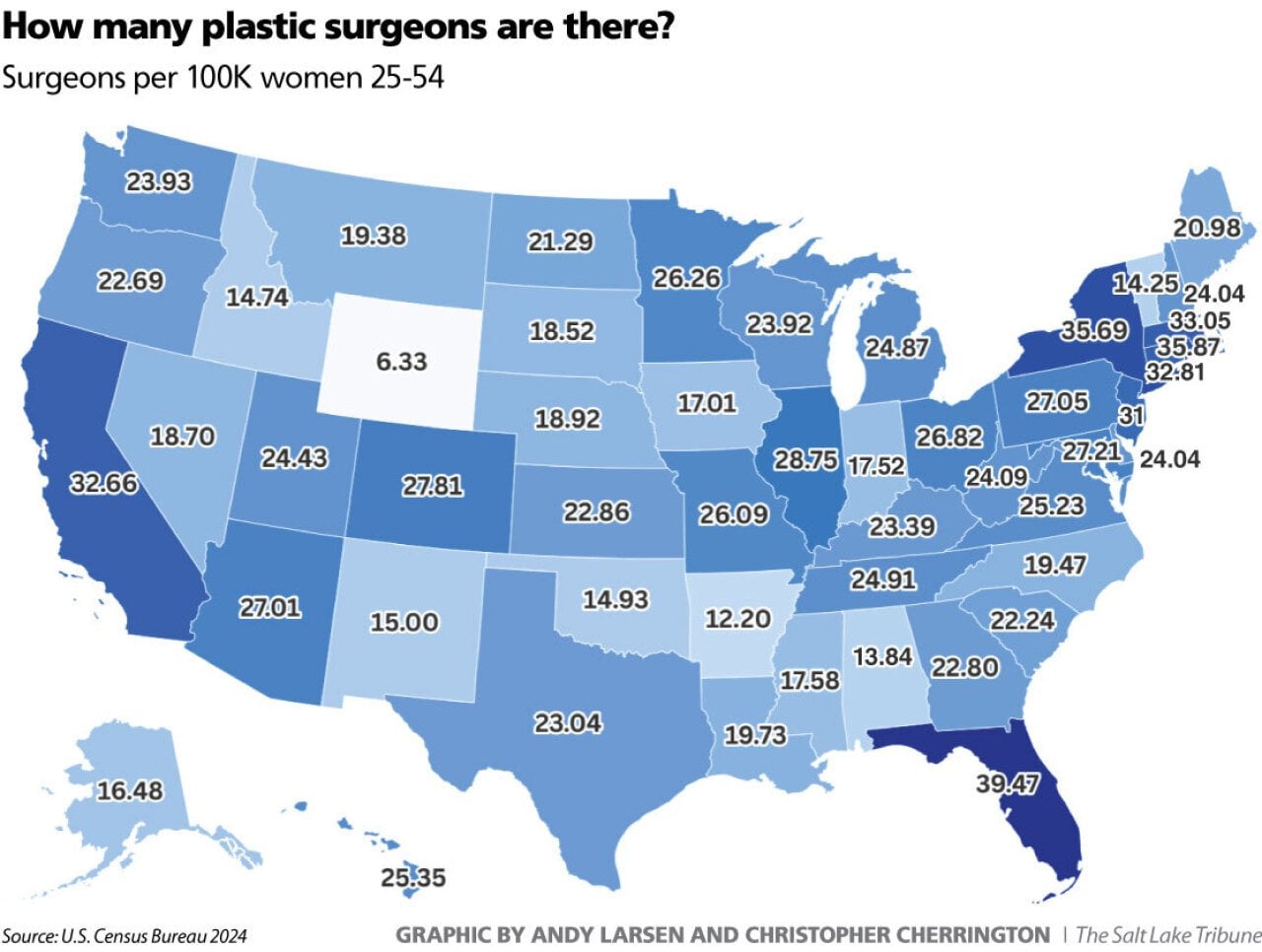
Perhaps the best count comes from the National Plan and Provider Enumeration System (NPPES), which any doctor who takes health insurance is required to sign up for. This database indicates there are 110 plastic surgeons in Utah. On a per-capita basis, that ranks seventh in the U.S.
Andy Larsen and Christopher Cherrington // The Salt Lake Tribune
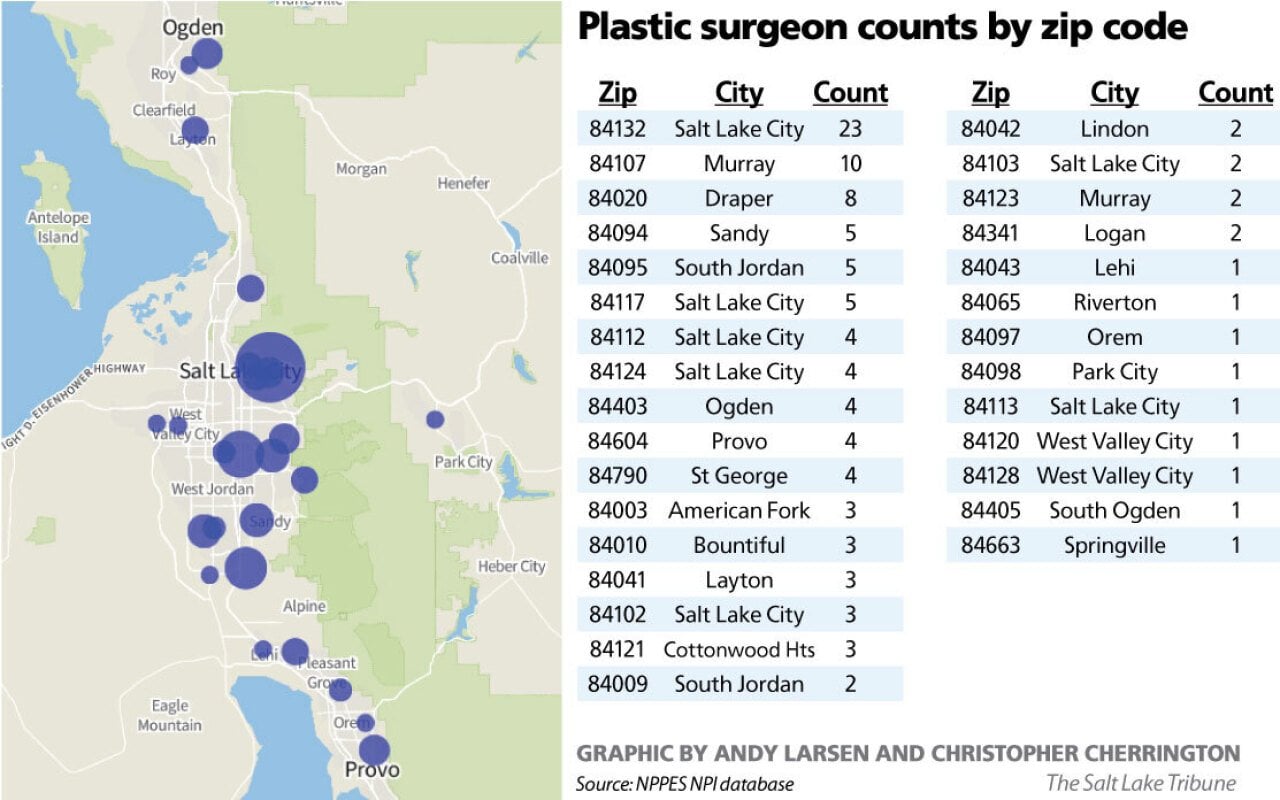
Most of those surgeons, 80 of them, are in Salt Lake County. Even on a per-capita basis, there are significantly more plastic surgeons in Salt Lake County than in any other county in the state. Twenty-three of the surgeons are affiliated with the University of Utah.
Andy Larsen and Christopher Cherrington // The Salt Lake Tribune
One caveat: Most plastic surgeries are performed on women (93%), and on people between 34 and 53 (75%). Utah does have a larger percentage of women between the ages of 25 and 54 — the Census age bracket most similar to the above — than other states. If you account for this demographic tendency, Utah ranks 20th in the nation in plastic surgeons per capita.
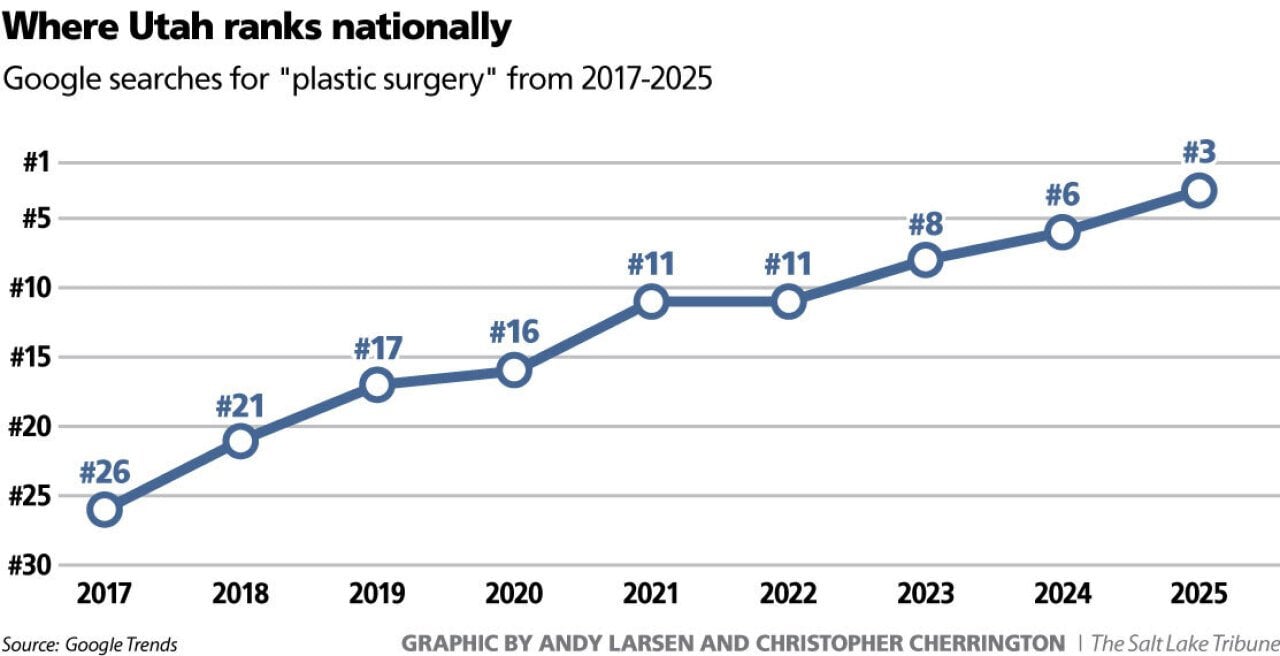
But Google search data indicates that interest in plastic surgery is growing in the state. Less than a decade ago, Utah ranked No. 26 in terms of the number of searches per capita for “plastic surgery.” In 2025, though? It ranked No. 3.
Andy Larsen and Christopher Cherrington // The Salt Lake Tribune
Utah’s cultural influences
In 2023, Brigham Young University professor and researcher Sarah Coyne and colleague Lauren Barnes looked at the crossover between body image, cosmetic surgery, and religiosity in a sample of 1,333 Latter-day Saints, aged 18 to 70, from across the nation.
According to their findings: “If you are saying that your religion is really important to you, you tend to have less cosmetic surgery,” Coyne said. “That’s odd, living in Utah, where we have a very high religious population, but then we have this certain stereotype of everyone having cosmetic surgery here.”
Nearly 14% of Latter-day Saints surveyed had major cosmetic surgery, and 20% had cosmetic enhancements. The study also found that people who believed in “costly grace” tended to have more cosmetic enhancements.
“Costly grace means this is a belief that I have to earn God’s love and grace,” Coyne said. “Now, the way that I earn that could be anything. It’s usually like I’ve got to be perfect. … Sometimes appearances are tied into that.”
Other factors contribute to Utah’s plastic surgery numbers, too.
“Perfectionism tends to be high in certain parts of our culture. [It] just kind of teaches you what you need to look like and need to be,” Coyne said. “The main reason that goes into this is that we have extremely unrealistic standards of beauty for women. Patriarchy, all of the different things, that’s why.”
Last year, the Utah Women & Leadership Project at Utah State University published a research brief on cosmetic surgery and body image among Utah women, which said the state’s “puzzling reputation for vanity and cosmetic surgery” is “fueled by a perfect storm of religious and cultural influences.”
The snapshot quotes research that has “found that homogenous societies, such as Utah, can have a contagion effect that pressures individuals into cosmetic surgery.”
Susan Madsen, the director of UWLP, said two of those homogenous characteristics in Utah are race — 89% of the state identifies as white — and religion.
“When we are around people that are like us, in terms of looks, skin, culture, religion, this competition for some reason arises,” Madsen said.
Reclaiming her body
Dr. Kevin Rose, a plastic surgeon with 25 years of experience, lists similar reasons as to why Utahns gravitate toward plastic surgery as Coyne and Madsen. He’s also noticed that his patients from Utah like to take care of themselves — particularly moms.
“So many women have a lot of children in Utah. There’s a lot of breastfeeding,” Rose said. “They just want to get their pre-baby body back.”
Trent Nelson // The Salt Lake Tribune
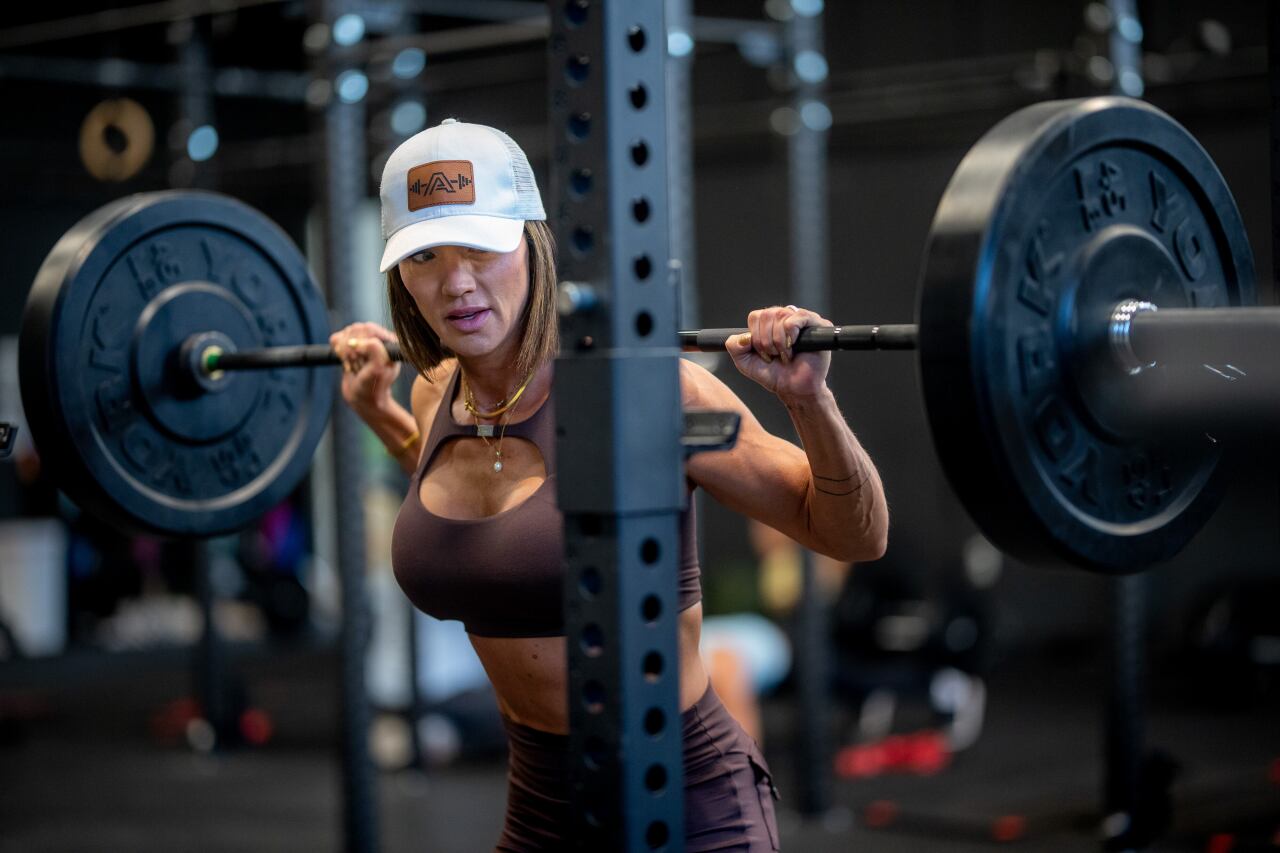
That was the case for Lehi resident Amy Williams, above, a patient of Rose’s who first saw him eight years ago for a breast augmentation — a decision she made to reclaim her body.
“I am a mom of six kids and I nursed all of my six babies, and I had absolutely no breast tissue left,” Williams said. “I wanted to restore what was lost.”
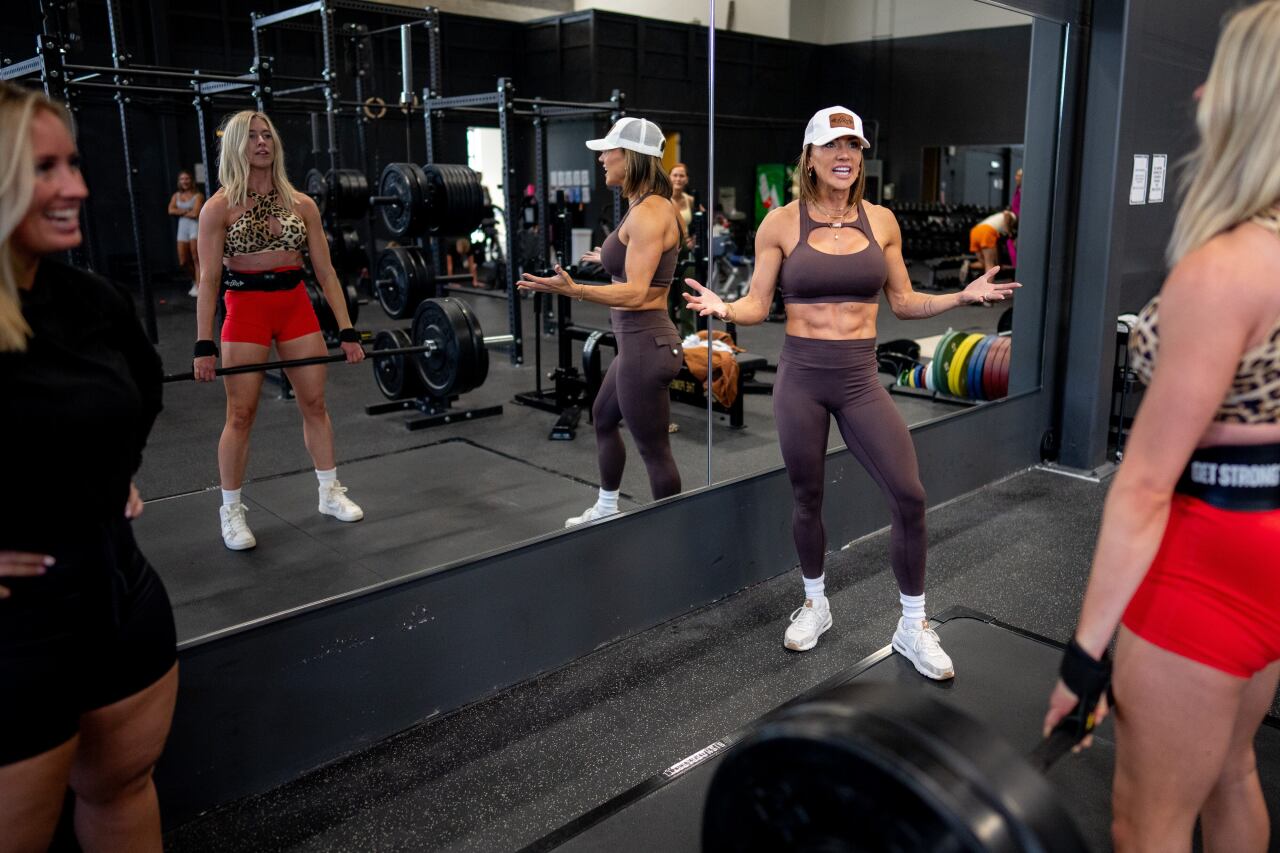
Williams is also a fitness influencer dedicated to losing weight and building muscle. She said that led her to have a “very flat chest.”
“I just felt so masculine, so I really wanted to just restore my femininity the first time around,” she said. Earlier this year, Williams did a reaugmentation with Rose since her implants had loosened from her body recomposition.
“As soon as I got it done, I was so happy with the results, I thought to myself, ‘Why didn’t I do this years ago?’” Williams said. “It completely restored my femininity and the way I felt about myself. It gave me confidence.”
Williams hears similar stories from the women who attend her weightlifting classes.
“It is absolutely a sacrifice to give up our body for pregnancy, nursing,” Williams said. “There’s some things that just can’t be restored without intervention or without help.”
In her work, Williams said seeing women go through various surgeries like mommy makeovers, tummy tucks or breast augmentations has a lasting effect.
“They turn into a more confident, outgoing, kind person. There’s just this beauty that they have that comes from within when they feel good about themselves,” she said.
Trent Nelson // The Salt Lake Tribune
What are the trends in plastic surgery?
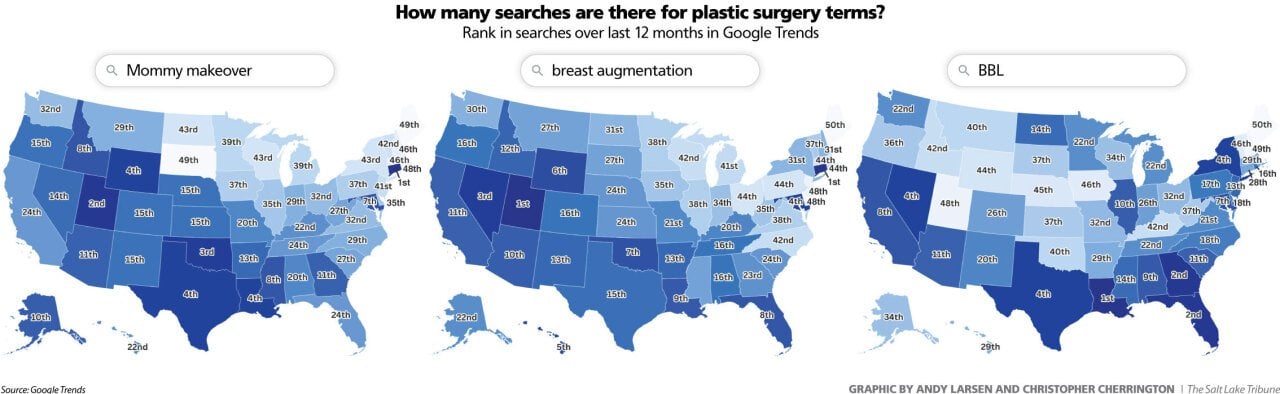
Thanks to those societal factors, the explosion in plastic surgery interest in Utah has occurred differently in Utah compared to other states. Perhaps due to Utah’s focus on families, searches for “Mommy makeovers” are very common in Utah relative to other states.
Patel, who has done body work in the past, considers Utah “the capital for mommy makeovers.”
Andy Larsen and Christopher Cherrington // The Salt Lake Tribune
In searches for “breast augmentation,” Utah ties for the No. 1 spot with Connecticut, with Nevada’s unique economy coming in third.
Twenty years ago, Rose said larger implants were more popular. But these days, most people come in and ask for more subtle and natural breast implant options. In fact, the most popular procedure he does is a breast rejuvenation procedure.
Utahns aren’t enamored with all kinds of plastic surgery, though. Brazilian butt lifts — more frequently referred to as “BBLs” are rarely searched for in Utah. Instead, it’s Louisiana that comes in No. 1 here, with fellow southern states Georgia and Florida tying for second.
Rose has observed this data firsthand.
“Utah tends to be maybe a little bit more conservative than other areas of the country in terms of what’s asked for,” he said.
For searches about facial surgeries, which are most popular in California, Utah’s ranks vary. For the search term “nose job,” Utah ranks third; for “face lift,” Utah ranks 14th; and for “neck lift,” Utah ranks 28th.
Patel was the chief of facial surgery at the University of Utah before he opened his private practice and is well-known for two procedures he designed: the hammock lift — which rejuvenates the top two-thirds of a face — and the Patel deep plane facelift — which utilizes soft tissue in the skin to prevent neck sagging.
“Most of my work these days is head and neck reconstructive and cosmetic surgery,” Patel said. “I do a lot of face and brow lifts, blephs, tumors and cancers, and broken bones and all that sort of stuff.”
He’s currently working on a book featuring 100 essays from his male and female patients. All the testimonials answer one question: Why did the individual decide to do a facelift?
“The reasons can be everything,” Patel said. “Men will say: ‘I started this company. I’m the boss. People keep on telling me, I look tired. When am I going to retire?’”
And, for women, “It’ll be a life change, either they get a divorce or a death in the family. … When ladies get in their late 40s, 50s, many women will say, ‘I became invisible,’ Patel said, “This is a phrase that I’ve heard again and again.”
Throughout his career, Patel has seen many changes in the industry.
Because of social media, he said, people are more aware of the variety of plastic surgery procedures out there, and his facelift practice has “grown enormously.” He’s also seen exponential growth in nonsurgical procedures like Botox since he first started.
Cost also plays into it. “We’re a lot cheaper than New York and LA, they charge literally eight, nine, [even] 10 times what we charge,” Patel said.
Another change: the audience for surgeries.
“[There] used to be a time when cosmetic surgery was sort of for the upper classes, people in the higher financial brackets,” Patel said. “In the last 10 years, I’ve started seeing just ordinary people, who work ordinary jobs, housewives, secretaries.”
Utahns do care deeply about the quality of their plastic surgeons, though. In general, Utah tended to rank very highly for various searches looking for reviews of surgeries, and the state ranked No. 1 for the term “best plastic surgeons.”
Rose specializes in breast and body contouring. When he moved to Utah in 2004, he remembers people questioning his decision to come to the Beehive State, wondering who would be getting plastic surgery there.
Now, the self-described “King of Cleavage” has had patients visit all the way from China.
“People come from all over because they just know that a lot of plastic surgery is done here,” Rose said. “They want to go somewhere where people are really experienced.”
So, yes, Utah is a hot spot for plastic surgery — and a growing one. Through the state’s confluence of social media and reality TV, quality doctors at a reasonable price, and even a bit of unique religious influence, there’s no doubt: Utahns’ minds are changing on the business of changing bodies.





(0) comments
Welcome to the discussion.
Log In
Post a comment as Guest
Keep it Clean. Please avoid obscene, vulgar, lewd, racist or sexually-oriented language.
PLEASE TURN OFF YOUR CAPS LOCK.
Don't Threaten. Threats of harming another person will not be tolerated.
Be Truthful. Don't knowingly lie about anyone or anything.
Be Nice. No racism, sexism or any sort of -ism that is degrading to another person.
Be Proactive. Use the 'Report' link on each comment to let us know of abusive posts.
Share with Us. We'd love to hear eyewitness accounts, the history behind an article.