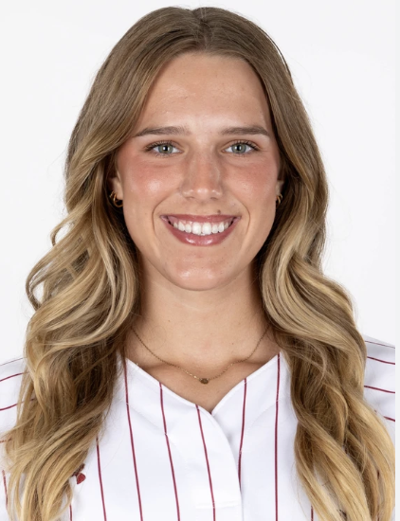
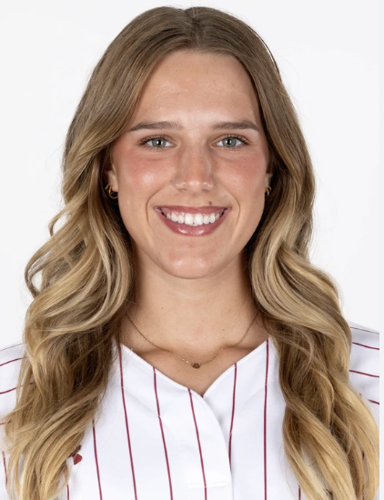
Mizzou softball has added pitcher Nealy Lamb from the transfer portal, according to Brady Vernon of SoftballAmerica.
Lamb, originally from Cades, South Carolina, played for the Gamecocks last year, earning strikeout No. 200 of her career on April 13 against Arkansas.
Lamb was the 2024 Big South Pitcher of the Year and Freshman of the Year with Charleston Southern. She also earned Big South All-Freshman and All-Conference honors with the Buccaneers. Lamb was the first player in Big South history to earn those accolades in the same year.
Lamb went 2-0 in her freshman season and pitched 14 shutout innings against Radford. As a sophomore at South Carolina, Lamb went 10-3 with a 3.26 ERA and 81 strikeouts between 16 starts and 13 relief appearances.
Last season, Lamb appeared in 34 games, 12 of them starts, and had 47 strikeouts with a 4.37 ERA.
Next City and Technical.ly report on Philadelphia's housing crisis as Mayor Cherelle Parker explores modular construction to create 30,000 affordable units.
Keep it Clean. Please avoid obscene, vulgar, lewd,
racist or sexually-oriented language. PLEASE TURN OFF YOUR CAPS LOCK. Don't Threaten. Threats of harming another
person will not be tolerated. Be Truthful. Don't knowingly lie about anyone
or anything. Be Nice. No racism, sexism or any sort of -ism
that is degrading to another person. Be Proactive. Use the 'Report' link on
each comment to let us know of abusive posts. Share with Us. We'd love to hear eyewitness
accounts, the history behind an article.
Average Car Insurance Rates as of June 2026 | Insurify
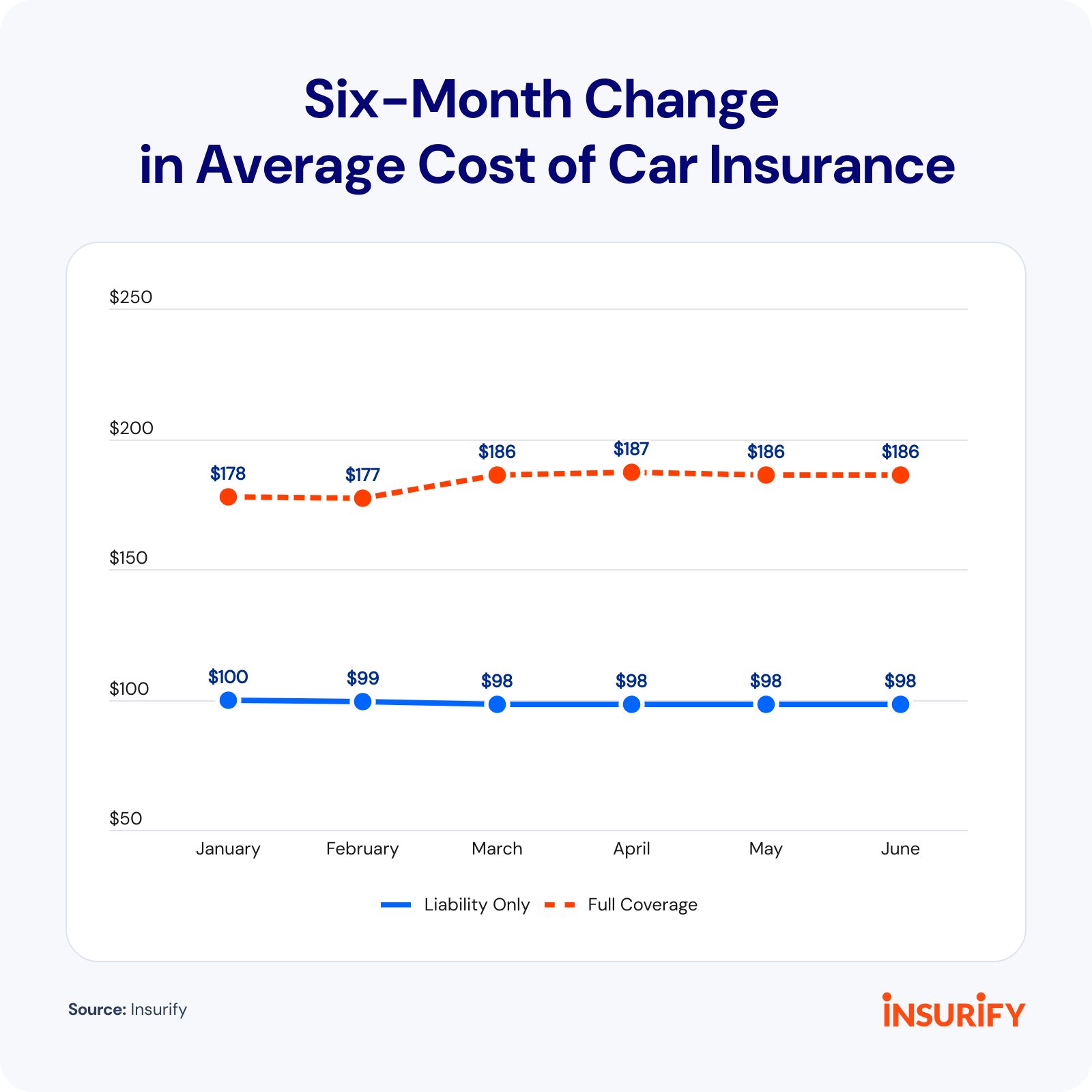
Car insurance rates have continued declining throughout 2026 but remained stagnant last month. The national average rate for full-coverage car insurance held steady at $186 per month through May, according toInsurify data. The national average liability rate was idle as well, remaining at $98.
Average cost of car insurance by state as of June 2026
Insurance rates can vary greatly based on location, which influences factors like exposure to extreme weather, repair costs, traffic congestion, and vehicle crime rates.
Here are the monthly averages for full and liability coverage across the country.
5 states with the highest car insurance rates as of June 2026
Maryland and Rhode Island remain the most expensive locations for car insurance in the nation. Delaware returns to the top five, replacing New York.
5 states with the lowest car insurance rates as of June 2026
New Hampshire retains the top spot for the most affordable car insurance, with rates well below the national averages of $98 per month for liability and $186 for full coverage. All five states remain in the same position as the previous month.
Factors that affect car insurance rates
Car insurance rates can vary significantly among drivers based on many factors that insurers use to estimate risk. Some common rating factors include:
Driving history:Insurers consider whether a driver has a clean record or infractions such as speeding, driving under the influence (DUI), or causing an accident.
Age:Driving experience and accident risk closely correlate with age, actuarial data shows.
Gender:Statistically, women are less likely than men to cause accidents and engage in risky behaviors like aggressive driving.
Location:Where a policyholder lives and drives affects their exposure to risk factors such as extreme weather, vehicle crime rates, and accident rates.
Credit history:Data indicates that drivers with better credit are less likely to file car insurance claims than those with poor credit.
Vehicle make and model:Vehicles that are less expensive or have multiple safety features cost less to insure.
Vehicle usage:Driving fewer miles per year reduces a vehicle’s exposure to the day-to-day risks of driving.
Vehicle equipment:Safety features like lane-keeping assist and blind-spot warning can help decrease the risk of accidents.
Coverage type:Generally, liability-only coverage costs less than full-coverage car insurance.
Coverage limits:The amount of coverage you buy affects annual premiums. Minimum coverage is typically the cheapest but doesn’t offer enough financial protection for most drivers.
Deductible:A higher collision and comprehensive coverage deductible (liability coverage has no deductible) reduces rates, as the insurer assumes less risk for the cost of repairs.
How to save on car insurance
Every state except New Hampshire requires drivers to carry a minimum amount of liability coverage. Insurance professionals recommend buying more coverage for greater financial protection in the event of an at-fault accident. And if a driver leases or finances a vehicle, the leasing company or lender will require them to buy full-coverage car insurance.
Drivers can take the following steps to reduce the cost of car insurance:
Drive safely.Avoid speeding, hard braking, distracted driving, and other risky driving behaviors that could cause a claim.
Look for discounts.Most insurers offer discounts, such as good student or multi-car discounts, that can help reduce premiums.
Increase the deductible.A higher collision and comprehensive deductible typically leads to lower rates.
Adjust coverages.Liability-only coverage is the cheapest insurance available, and minimum coverage is the cheapest liability option. But drivers should be careful and buy enough coverage to adequately protect themselves financially.
Comparison shop.Drivers should compare rates from multiple companies every time their policy comes up for renewal.
Related articles
Methodology
Insurify data scientists analyzed more than 97 million rates from car insurance applications in Insurify’s proprietary database to calculate the premium averages displayed on this page. These premiums are real quotes that come directly from Insurify’s 50+ partner insurance companies in all 50 states and Washington, D.C. All premium averages reflect the cost of car insurance for drivers between the ages of 20 and 70 with clean driving records and average or better credit.
For most states, full-coverage premium prices represent two-year rolling medians in order to manage extreme market volatility seen over the past few years as insurance companies have sought substantial rate increase approvals and deprioritized writing new policies in the face of rapidly rising costs.
Liability-only premium prices — as well as full-coverage prices in Maine, Massachusetts, Michigan, Montana, North Dakota, Nebraska, New Hampshire, New Jersey, and Vermont — represent one-year rolling medians.
Liability-only premium averages correspond to policies with the following coverage limits:
Bodily injury limits between state-minimum rates and $50,000 per person, $100,000 per accident
Property damage limits between $10,000 and $50,000
No additional coverage
Full-coverage premium averages correspond to the same bodily injury and property damage limits in addition to:
Comprehensive coverage with a $1,000 deductible
Collision coverage with a $1,000 deductible
For full-coverage historical data, please visit Insurify’s Auto Insurance Data Center. Data housed in the Data Center dates back to 2021 and represents the average yearly cost of full coverage for drivers between the ages of 20 and 70 with a clean driving record and average or better credit.
Monthly prices are based on two-year rolling averages in order to manage extreme market volatility seen over the past few years. Insurance companies have sought substantial rate increase approvals and deprioritized writing new policies in the face of rapidly rising costs.
Oil and gas leaders: Trump Iran deal is good news, normalization to take months
(The Center Square) – Texas oil and natural gas industry leaders are cautiously optimistic about the president’s announced ceasefire deal with Iran.
President Donald Trump announced he plans to sign a deal with Iranian leaders on Friday, ending more than 100 days of a U.S.-Israel-led conflict that shut down the Strait of Hormuz and resulted in retaliatory attacks against U.S. allies’ oil and gas refineries.
The conflict caused the Dow Jones, S&P 500 and Nasdaq Composite to all report losses over the last few months. It also caused oil futures to top $120 a barrel, as the least expensive gas at the pump also topped $4 a gallon for the first time in Texas history. In other states, gas and diesel reached record highs but in Texas, home to refineries and record exports, gas prices reached an all-time high.
The conflict had rippling effects in Middle Eastern countries forcing Saudi Arabia, Kuwait, UAE, and Iraq to cut oil production and shut down several refineries critical to the region after they were damaged by Iranian retaliatory fire, The Center Squarereported.
By April, theconflict had causeda net loss of up to 14.5 million barrels per day (bpd) of crude oil being transported through the Strait; aluminum, helium and fertilizer shortages were increasing, a jet fuel crisis was expected, and insurance companies were dropping coverage for cargo ships or increased premiums by 50%, The Center Squarereported.
“A ceasefire framework and the prospect of a formal agreement with Iran are welcome developments for global energy. The closure triggered the largest supply disruption in the history of the global oil market, with roughly one-fifth of global oil consumption flowing through that strait daily before the conflict,” Ed Longanecker, president of the Texas Independent Producers & Royalty Owners Association (TIPRO) told The Center Square.
“Hundreds of ships remain trapped in the Persian Gulf, Gulf producers need time to restart throttled-back output, sea mines remain in the waterway, and core nuclear issues between Washington and Tehran are unresolved. Full normalization will take months,” he said.
He also reemphasized that the U.S. has been meeting global oil demand, led by Texas. Texas operators continued to break production records as well as exports of liquified natural gas (LNG), The Center Squarereported.
“What this crisis has confirmed is the irreplaceable value of American oil and gas. When the Strait closed, the United States stepped into the supply gap and partially offset what would have otherwise been a far more severe global price shock. No other energy-producing nation can mobilize at the speed or scale of the United States and the Permian Basin in particular,” he said, referring to producers in west Texas and southeast New Mexico.
“A durable peace agreement is good news, but the lesson of the last several months is unambiguous. Robust domestic production is not an economic preference, it is a national security necessity, and the American oil and gas industry delivered when the world needed it most,” Longanecker said.
Texas Oil & Gas Association president Todd Staples agreed, telling The Center Square that “an end to conflict and a successful diplomatic resolution signal a positive outcome for Americans and their allies alike. The oil and natural gas industry hopes for a speedy resolution and a return of predictability, because predictability supports planning. As global markets and shipping logistics adjust to this important step toward peace, Texas operators will continue to do what they do best by utilizing our state’s plentiful resources to deliver the energy that powers our modern way of life.”
Houston-based Andy Lipow with Lipow Oil Associates LLC addressed an obvious result consumers are already seeing at the pump: “The good news for consumers is that the oil market is selling off in anticipation of the reopening,” he told The Center Square. “We should see the national retail price of gasoline drop below $4 this week. That’s still a far cry from where it was prior to the conflict beginning when it was $2.98 at the end of February, but still 50 cents a gallon cheaper than where it was about one month ago.”
Oil futures fell to their lowest level since early March after the news of a ceasefire broke. The West Texas Index, the domestic benchmark, dropped to $80.75 a barrel. The international benchmark, Brent, dropped to $83 a barrel. All three major U.S. indexes also jumped after the news.
Lipow said there are still issues in the Strait like clearing mines, insurance companies adjusting prices for tankers and cargo ships “to say it is safe” enough to operate and insure them. Companies “need assurance of a safe shipping lane” and “guarantees from the Iranian government and IRGC that vessels will not be impeded, attacked, or seized,” he said.
For U.S. domestic oil producers, “higher prices have encouraged some companies to put additional rigs to work, but if prices fall significantly, they may be forced to curtail future spending in the oil patch” in the Permian Basin, Lipow said.
Rig counts have increased by seven in the U.S. over the past year,according toBaker Hughes as of June 5. Internationally, rig counts are down by 25.
Longanecker also provided a cautionary note adding that “Monday’s price drop is a risk-premium correction, not a restoration of normal supply.”
Can Philly mass-produce its way out of a housing crisis?
Gabriel Donahue for Next City and Technical.ly
Can Philly mass-produce its way out of a housing crisis?
Across the U.S., mayors and city councils have been making bold promises to solve the urban housing crisis. In Philadelphia, Mayor Cherelle Parker is looking to modular building as an essential part of her plan.
Parker’s ambitious $2 billion Housing Opportunities Made Easy (H.O.M.E.) initiative set out to create 30,000 affordable units across Philadelphia through restoration and construction. But her administration faces the same challenges that have hit cities across the country, from Los Angeles to Maine.
Building material costs have climbed more than 41% since the pandemic began. Tariff and supply chain disruptions added thousands to the price tag. The construction industry faces a shortage of roughly 350,000 workers.
To make H.O.M.E. happen in this environment, Next City and Technical.ly report, the city is looking beyond conventional options.
“It needs to be all of the above: union, non-union, modular, panelized, 3D printed — all of the above,” says Tom Hardiman, executive director of the Modular Building Institute and the Modular Home Builders Association. “If we do that, I think we can, collaboratively, build a lot more housing than we can if we each try to compete with each other.”
Traditionally, single-family homes are “stick built,” with workers constructing the building on site, piece by piece. With modular construction, homes are built off-site in a factory — either as entire “volumetric” boxes or large “flat-pack” panels — then shipped to their final location for assembly.
Some companies are experimenting with 3D printing — using large-scale printers to extrude layers of concrete or other materials to form walls and structural elements — and robotic construction, seeking to automate some of the most labor-intensive steps in the building process.
Each approach promises to shorten timelines, reduce waste, and ease the strain on a shrinking workforce. None is a silver bullet.
Arica Young, director of Housing Access and Affordability at the Lincoln Institute of Land Policy and a Philadelphia native, notes that leveraging these new techniques requires intentional forethought.
“You can’t use the same planning mechanisms for modular or manufactured housing that you do for site-built. They are two completely different systems that have different requirements,” Young says.
A modular home isn’t automatically an affordable one. Elements such as design, inspection approvals, utilities and land acquisition and remediation must be pre-aligned to ensure the process moves forward. “So, if you don’t know that, and you go in to use modular or manufactured,” she says, “you might find it actually costs you more. Because you haven’t been able to optimize the efficiencies there.”
Courtesy of Apex Homes and the Modular Home Builders Association
A modular housing factory in North Philly?
Mayor Parker’s proposed 2027 budget, introduced in March, includes $10 million designated for modular building. It is the only technology the city has specifically identified as part of its campaign, in part because it’s a relatively well-established option. Other developers and public housing agencies around the country have successfully constructed affordable and below-market rate housing using these techniques, passing their cost savings onto tenants.
Building houses in a factory offers the cost efficiencies and waste reduction of buying and producing in bulk. It also removes interruptions created by weather, and in turn decreases costs from a shortened construction timeline.
An Urban Institute analysis found that modular single-family homes could be built about two months faster than traditional, stick-built homes, as of 2023. About 20% of new modular-built homes sold for less than $300,000, as compared with about 14% percent of stick-built homes.
“We can dramatically increase the supply of housing much quicker than conventional construction,” says Hardiman, of the Modular Building Institute. “That plays into the market dynamics: more supply … your costs are going to bend downward.”
Volumetric Building Companies is one Philadelphia-based modular developer that has already built several market-rate apartment buildings, including SOLO on Chestnut at 43rd Street in West Philly — where they estimated saving a year’s worth of construction time — as well as a 324-unit student housing facility near Temple University in North Philly.
In 2023, the company completed construction of Veteran’s Village, a 47-unit apartment building in Philly’s Frankford neighborhood, developed with the VBC Giving Foundation to provide affordable homes for veterans experiencing homelessness and housing insecurity. Modular construction meant it took 14 months and $6 million to build, which the developer says is “only a third of the typical budget for similar projects.”
The modular housing industry is expected to grow 7.8% annually through 2030, according to a market analysis report by Grandview Research. Volumetric building currently accounts for slightly above 5% of new construction, per Hardiman.
Depending on size, land cost and equipment type, building a modular factory can cost at least $10-$50 million, he said. Philly’s budgeted $10 million “may be used for site preparation and utility and infrastructural improvements for a modular housing factory and/or the development of modular housing on publicly owned land,” Jamila Davis, the communications supervisor for the Department of Planning and Development, told Next City and Technical.ly.
There are already 17 volumetric modular factories located within 200 miles of Philadelphia. That’s roughly the distance for distribution before transportation costs become excessive, according to Young, of the Lincoln Institute of Land Policy.
Photo by Gabriel Donahue
Philly is considering building another one, perhaps right in the middle of the city, at the site pictured above in North Philadelphia's Logan Triangle.
Per Davis, officials are currently reviewing responses to a March request for information to construct such a factory, or multiple ones. The administration is eyeing the 35-acre Logan Triangle in North Philadelphia as a potential factory site. The city previously demolished nearly 1,000 homes there after they were found to be sinking into the ground.
Young expressed concerns about the location, where remediation has been off and on for decades.
“It’s a great location in terms of transportation, but what worries me is the land itself,” she says. “I wonder, does the time it takes to remediate and make that a safe location to put a factory negate your ability to actually produce houses fast enough? … Don’t get me wrong — everywhere you would put it, it’s going to need some kind of remediation. But that site to me seems exceedingly problematic.”
Then there’s the question of speed. Parker’s administration has pledged to build 13,000 new homes before her first term expires at the end of 2027.
Rachel Siegel, a senior officer on the Housing Policy Initiative at the Pew Charitable Trust, believes it could therefore be beneficial to utilize the existing factories, possibly creating a pilot program to determine whether modular is a good solution to Philadelphia’s housing shortage.
“It’s reasonable to start with what exists already,” Siegel says. “If this needs to get started sooner, if there are other factories out there that could be leveraged.”
The promise of construction jobs — of a different kind
Building a modular construction factory locally would check off H.O.M.E. initiative’s box for creating jobs for Philadelphians — jobs that Parker has been adamant will be union positions.
“The Building Trades are gonna do the work,” Parker said at a press conference launching the initiative last February, referring to the umbrella group of more than 50 local unions in the construction industry. “They are gonna help us train, as well, the next generation of skilled tradesmen and women in the city of Philadelphia.”
The City’s request for information on factory development and operations includes a request for “recommendations, best practices and innovative ideas for incorporating workforce development goals” into the factory’s operations.
Modular manufacturing jobs can be appealing to younger people entering the workforce, Hardiman says. They don’t need to travel to various job sites, the environmental conditions are predictable, and while they are still factory jobs, the manual labor is substantially less than for a typical contractor due to hybrid automation.
With Pennsylvania’s Department of Labor & Industry estimating a shortage of 300,000 skilled trade workers by 2030, gains based on these factors could prove vital.
“We’re falling further behind on housing shortages,” Hardiman says. “On-site labor is tight now, and it’s only going to get more restrictive in the next five years. There’s more people exiting the construction trades than entering. I think it’s just going to get worse in the next five years unless we do something like modernizing or industrializing the construction.”
All 8 onboard B-52 die in crash at Edwards Air Force Base
(The Center Square) - All eight people onboard a B-52 Stratofortress died when the plane crashed shortly after take-off Monday for a routine training mission from Edwards Air Force Base in California.
“Today, Edwards Air Force Base experienced a horrible tragedy, and we lost eight great Americans,” Col. James Hayes, the deputy commander at the base's 412th Test Wing, said during a news conference late Monday afternoon.
The group onboard was a mixed crew made up of government civilians, government contractors and uniformed military personnel.
“It is with great sadness that we confirm two Boeing employees were among those on board,” Boeing posted on X Monday night.
Secretary of the Air Force Troy Meink posted a message Monday on X as well. "We are deeply saddened by the eight lives lost in today’s tragic crash at Edwards AFB. We mourn this loss and honor the service of our Airmen, civilians, and contractors who work every day to advance our mission. I send my sincerest condolences to their families and loved ones."
According to Hayes, the plane crashed immediately after take-off and burst into flames. The crash was entirely contained within Edwards Air Force Base, which is in the Mohave Desert and is 100 miles north of Los Angeles.
First responders sprang into action and put out the flames. Once the crash was deemed unsurvivable, recovery operations were put into place.
“Our test missions take place every day, multiple times a day,” Hayes told reporters. He added that it is the first tragic crash he has experienced during his three years on the base.
“At this point, we don’t have any indication as to what the cause of this was,” Hayes said.
A safety board is investigating the crash and will issue its initial report within 30 days, Hayes told reporters. He said additional details from the investigation will be released to the public during a process that could take up to six months.
Edwards Air Force Base has been reopened for individuals to come on the base, but operations for Tuesday have been terminated due to runway conditions.
“Our thoughts and prayers go out to the family members," Hayes said. "This is a tragedy, and this is going to be the worst days of their lives."
Hanaway leads push for EPA abortion pill water safety tests
Missouri Attorney General Liz Catherine Hanaway is leading a coalition of state AGs asking the U.S. Environmental Protection Agency to study the potential impact of the abortion drug mifepristone on America's waterways and drinking water supply.
The 14-state coalition is urging the EPA to add mifepristone and its generic equivalents to the agency’s Contaminant Candidate List, which may lead to additional study and potential regulation under the Safe Drinking Water Act.
“Americans deserve a science-based review of mifepristone’s presence in wastewater and any potential impacts it would have on public health,” Hanaway said in a social media post.
“Over the last decade, the FDA has eliminated many of the protections that minimized the health risks posed by mifepristone and its approved generics, including the in-person dispensing and check-up requirements that kept medical staff involved in the process,” the June 5 letter states. “Not only were the FDA’s changes to the regimen and risk evaluation and mitigation strategy (REMS) unlawful and unsafe, but the loosened regulations have also increased the number of chemical abortions occurring in the home, resulting in tons of chemically tainted medical waste being flushed into American waterways.”
“Louisiana has been leading the fight against the dangers of mifepristone for years, Murrill said. “We’ve taken action to stop abortion drugs from being illegally shipped into our state and to hold abortion providers accountable for violating Louisiana law.
“As the use of mifepristone continues to increase, the EPA has a responsibility to investigate potential threats to our drinking water, and this drug should be added to the Contaminant Candidate List for further evaluation. Proud to join my fellow Attorneys General in this effort.”
If mifepristone reaches sufficient concentration, the coalition says pregnant women who unintentionally ingest the drug through the public water supply could be at greater risk of health complications than the general population. In addition, recent research suggests that mifepristone can affect reproductive organ development and fertility.
Chemical abortions accounted for 63 percent of all U.S. abortions in the formal health care system as of 2023, compared to 31 percent in 2014 and 14 percent in 2005. These numbers do not include self-managed chemical abortions that occur when abortion providers mail mifepristone in violation of state law, which is also increasing.
In addition to Hanaway and Murrill, the other AGs who signed the letter are from Alabama, Alaska, Arkansas, Florida, Idaho, Indiana, Kansas, Kentucky, Nebraska, Oklahoma, South Carolina and Texas.
Montana AG Knudsen asks state supreme court to dismiss Gallatin County Attorney's case
BOZEMAN, Mont. - Montana Attorney General Austin Knudsen filed a new response in court on Monday, asking the state supreme court to dismiss the Gallatin County Attorney's case against him, calling it "political."
The dispute began in April over Immigrations and Customs Enforcement (ICE) actions, specifically requesting documents in Gallatin County that the county attorney did not grant. Knudsen has argued that ICE, as a criminal justice agency, is entitled to any records it requires without examination from officials, and the Gallatin County Attorney is arguing that ICE does not qualify as a criminal justice agency under the law in Montana.
"As Attorney General, I have the authority to invoke supervisory control over Gallatin County Attorney Audrey Cromwell's office," Knudsen wrote on social media. "That authority was granted by the Legislature, and therefore, the court should dismiss this case."
Poll: Voters back redistricting commissions over legislatures 2-to-1
(The Center Square) – American voters trust independent redistricting commissions over state legislatures to draw fair congressional district lines by a more than 2-to-1 margin, a new national poll finds.
The Center Square Voters' Voice Poll found 41% of registered voters trust independent commissions to draw fair congressional lines, compared to 16% who trust state legislatures and 15% who trust courts. Twenty-seven percent were not sure.
The preference for independent commissions was bipartisan. Republicans favored commissions over legislatures 38% to 19%, while Democrats preferred commissions 45% to 15%. Among true independents, 38% trusted commissions most, compared to 8% who trusted state legislatures, although 43% were not sure.
Congressional district lines are typically redrawn once a decade following the U.S. Census. That norm has shifted, with more than a quarter of all congressional seats redrawn mid-decade after President Donald Trump called on states to redraw their maps ahead of the 2026 midterms.
Kyle Kondik, managing editor of Sabato's Crystal Ball at the University of Virginia Center for Politics, said Democratic-run states will face challenges.
"We will likely see Democratic-run states going to their voters in 2027 to ask them to unwind or overturn their states' preexisting redistricting commissions and rules, like California and Virginia did," he told The Center Square. "Winning these battles may not be easy in some places, and this sentiment is a reason why."
Benjamin Schneer, an associate professor of public policy at Harvard Kennedy School, said voters view redistricting abuse as a fundamental fairness issue.
"Survey research has found that Americans think of gerrymandering as on the same footing as forms of political corruption," he told The Center Square.
Schneer said poll opposition alone is unlikely to stop the practice. It would take sustained focus and a compelling narrative for politicians or judges responsible for allowing mid-decade gerrymandering to be held accountable in future elections.
Justin Levitt, a professor at Loyola Law School in Los Angeles who tracks redistricting nationally, said the voter preference for commissions reflects a genuine, bipartisan preference for fair maps. When commissions are designed to be independent, they deliver independent maps, he told The Center Square.
He cited California's independent commission after the 2010 census, which drew two senior Democratic incumbents, Reps. Brad Sherman and Howard Berman of California, into the same district, forcing them to compete against each other, something the Democratic Party never would have done.
Jason Torchinsky, a political and election law attorney at Holtzman Vogel who has worked on redistricting cases, said commissions have drawbacks.
"Commissions for redistricting entirely remove electoral accountability from the process, and even non-partisan or bi-partisan commissions are often captured by interest groups along the way," he told The Center Square.
Walter Olson, a senior fellow at the Cato Institute who has written extensively on elections and redistricting law, said mid-cycle redistricting is expensive and disruptive, and the initial partisan advantages tend to disappear once the opposing party responds in kind.
Olson said Congress has the authority to act, and should use its enumerated powers to call a halt to mid-decade redistricting, with an exception for court-ordered redraws.
The National Conference of State Legislatures, a bipartisan organization that represents state legislatures across the country, said about 17 states use some form of commission to draw congressional district lines, including 10 that rely primarily on commissions rather than the legislature.
Lawmakers continue to play a role in redistricting even in those states, the organization said, whether by approving final maps or confirming commission members. Redistricting commissions are relatively new entities, NCSL told The Center Square, and additional redistricting cycles will provide a better understanding of their long-term impact.
Schneer said voter preferences can shift when redistricting becomes part of a larger partisan fight.
"Voters had previously passed a proposition to have an independent commission and then, as part of this larger partisan battle, turned around and suspended it," he told The Center Square. "That's an example that shows how much the messaging and context matters."
Noble Predictive Insights conducted the poll from June 1-4, 2026. It surveyed registered voters nationally via opt-in online panel and text-to-web cell phone messages. The sample included 2,585 respondents, including 915 Republicans, 1,013 Democrats, and 297 True Independents. The margin of error is plus or minus 1.93%.
FBI foils alleged terror plot at White House UFC event
(The Center Square) – The FBI foiled a plot set to disrupt Sunday's UFC fight on the grounds of the White House, FBI Director Kash Patel said on Tuesday.
Patel said federal officials first learned of the plan on June 10. The alleged plot involved using drones with attached explosives to hit buildings near the event, prompting a mass evacuation and steer crowds toward a group of snipers.
Investigators uncovered a Signal chat with at least 23 users discussing plans for the alleged attack. Individuals from multiple states participated in planning the event, FBI officials said.
Patel said "multiple individuals" were in custody in relation to the foiled attack. Investigators told Fox News five individuals were in custody as of Monday.
One suspect was taken into custody in Cincinatti, federal officials said. The White House UFC event was set to celebrate the 250th anniversary of the signing of the Declaration of Independene. The event also occurred on President Donald Trump's 80th birthday.
"We are built to detect, respond to, and bring to justice those who threaten the lives of American citizens – particularly during large gatherings like the historic UFC 250 fight," Patel said on social media.
Trump said he was not aware of the foiled plot when speaking to reporters on Tuesday.
"I haven't heard about it," Trump said.
Vice President JD Vance spoke on Tuesday morning about the planned attack to Fox News. He said harsh political rhetoric led to the alleged plan and called for more civility.
"We got to tell everybody to tone it down," Vance said. "I think a lot of my Democratic colleagues in Washington have got to look themselves in the mirror and say, 'why is so much of this political violence coming from our side of the spectrum?'"
Patel thanked the FBI, Secret Service and Department of Justice for acting quickly to respond and prevent the planned attack.
"I want to thank our great agents and partners, this work remains ongoing and we will continue to update the public as permitted," Patel said.
Pro-life org urges DOJ to end mail-order abortion after latest domestic assault case
(The Center Square) – After another domestic assault case involving the abortion pill, Susan B. Anthony Pro-Life America called on the Department of Justice and Acting Attorney General Todd Blanche to end mail-order abortion.
SBA Pro-Life America president Marjorie Dannenfelser said in a statement: “Enough is enough. We call on Blanche’s DOJ to settle with Louisiana by agreeing to a court-ordered consent decree that would end Biden’s unlawful mail-order abortion drug policy and restore in-person dispensing immediately while the FDA completes a prompt, rigorous safety review.”
When reached, a DOJ spokesman told The Center Square that “this Department of Justice remains committed to advancing President [Donald] Trump’s pro-life agenda.”
This commitment includes “dismissing criminal prosecutions and civil lawsuits against peaceful pro-life advocates targeted by the previous administration” and “using the FACE Act to protect pro-life pregnancy centers,” the spokesman said.
“The Department of Justice requested more time from the court for the FDA to complete its review of mifepristone REMS,” the spokesman said. “As the Supreme Court recognized in a unanimous ruling less than two years ago, it is the role of the FDA – not the federal courts – to evaluate drug safety data and impose appropriate precautions.”
SBA Pro-Life America’snews releaseexplained that “in the latest violent domestic assault using abortion drugs, a Louisiana man has been charged with felony crimes for slipping an abortion drug to a woman without her knowledge.”
SBA President Marjorie Dannenfelser said in her statement: “This horrific abortion drug poisoning caused a mother and child to be rushed to the hospital for an emergency c-section at 23 weeks, with the baby weighing just a pound and fighting for life.”
“Abortion drug poisoning attacks on women and children are always tragic, but they come as no surprise under a mail-order abortion drug regime that Acting Attorney General Todd Blanche must end,” Dannenfelser said.
“Federal courts have found the many harms of this Biden-era policy to be predictable and intentional.” Dannenfelser said.
“It is alsopolitically perilous: 7 in 10 Americans want these deadly drugs out of the mail, and nearly a third of GOP base voters are at risk of sitting out midterms if the GOP abandons pro-life policies,” Dannenfelser said. “Only immediate action can prevent future crimes before they happen.”
Dannenfelser noted that “tragically, 15,000 babies in states with pro-life laws are killed every month as mail-order abortion drugs effectively nullify those laws.”
“These dangerous drugs take a severe toll on women’s physical and mental health and give abusive men an easy tool to poison them against their will, even without their knowledge,” Dannenfelser said. “We’ve seen it over and over since Biden’s FDA removed in-person medical safeguards.”
Dannenfelser said she and SBA “thank God both mother and baby survived this deplorable attack” by abortion pill in Louisiana.
“At this moment, that little baby continues to fight in the hospital,” Dannenfelser said. “Though we do not know the child’s condition, babies born at 23 weeks and even earlier increasingly survive and thrive if given that fighting chance.”
Another Louisiana woman named Rosalie Markezich was harmed by the abortion pill a few years ago. She was coerced to take it by her boyfriend who ordered it from outside their pro-life state without Markezich’s consent, according toAlliance Defending Freedom.
Markezich and the state of Louisiana are currently suing the FDA for its “recklessness” as it relates to the mail-order abortion pill, according to Alliance Defending Freedom.
USDA announces charges against eight in SNAP fraud crackdown
(The Center Square) – Federal officials announced charges Tuesday against eight people accused of defrauding taxpayers of more than $1.3 million through the Supplemental Nutrition Assistance Program.
Among those arrested was a Minneapolis man alleged to have stolen more than $1.1 million in benefits.
The arrests were highlighted as part of the U.S. Department of Agriculture's “Tuesday Takedown,” which targeted alleged SNAP fraud schemes ranging from more than $1,000 to more than $1.1 million.
“Steal from SNAP. Get Busted,” USDA Secretary Brooke Rollins wrote on social media Tuesday morning. “These 8 fraudsters thought they could steal food assistance money and get away with it.”
According to the USDA, the largest case involved Abdidwahid Mohamed of Minneapolis, who is accused of defrauding more than $1.1 million from SNAP. Also known as food stamps, SNAP provides food assistance to approximately 40 million low-income Americans and is administered by states with federal funding and oversight from USDA.
The announcement comes less than a week after federal authorities celebrated the first arrest from the FBI's newly-launched “Most Wanted Fraudsters” list, as previously reported by The Center Square.
Minnesota has come under scrutiny from the Trump administration’s “war on fraud” efforts. Estimates place fraud losses in the state at between $9 billion and $20 billion, and some state officials are even facing criminal investigations tied to allegations they failed to stop widespread taxpayer-funded fraud.
U.S. House Oversight Committee Chairman James Comer, R-Ky., has led some of the investigations into fraud in Minnesota. He said on Monday that accountability is coming.
“States can no longer look the other way,” Comer said, applauding federal efforts to pass legislation addressing fraud. “Criminals are being held accountable.”
Rollins identified the eight individuals charged in Tuesday's announcement as:
• Timesha Fleming of Summerville, South Carolina - $76,502.
• Jenny Quinones of Amsterdam, New York - more than $12,000.
• Tiffany Butler of Sprakers, New York - $50,525.
• Abdidwahid Mohamed of Minneapolis, Minnesota - more than $1.1 million.
• J'Anne Mizro of Auburn, New York - more than $1,000.
• Jennifer Geddings of Sumter, South Carolina - $21,716.
• Lina Orovio-Hernandez of Boston, Massachusetts - $43,348.
• Aisha Carr of Milwaukee, Wisconsin - $2,808.
USDA did not immediately release additional details about the individual cases, though Rollins said the arrests are just the beginning.
“[USDA Food and Nutrition] is coming for everyone attempting to defraud the American taxpayer,” she said.






(0) comments
Welcome to the discussion.
Log In
Post a comment as Guest
Keep it Clean. Please avoid obscene, vulgar, lewd, racist or sexually-oriented language.
PLEASE TURN OFF YOUR CAPS LOCK.
Don't Threaten. Threats of harming another person will not be tolerated.
Be Truthful. Don't knowingly lie about anyone or anything.
Be Nice. No racism, sexism or any sort of -ism that is degrading to another person.
Be Proactive. Use the 'Report' link on each comment to let us know of abusive posts.
Share with Us. We'd love to hear eyewitness accounts, the history behind an article.