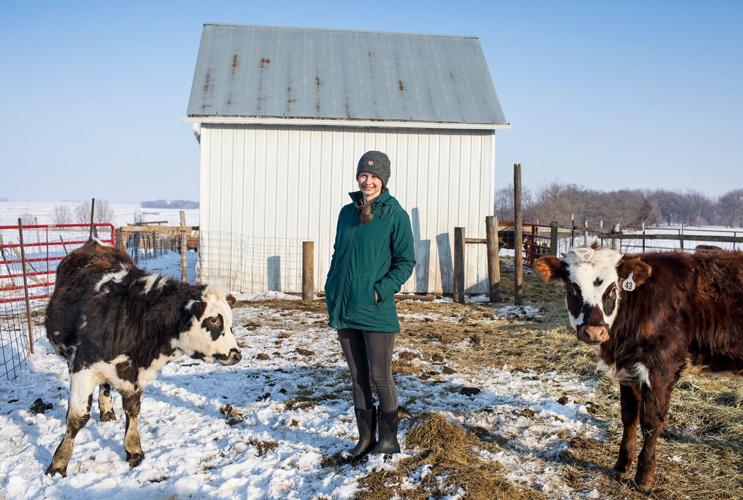
Ranae Dietzel has found a comfortable balance between tending the land, minding the animals, raising a family — and making and selling cheese. Photo by Kathryn Gamble.
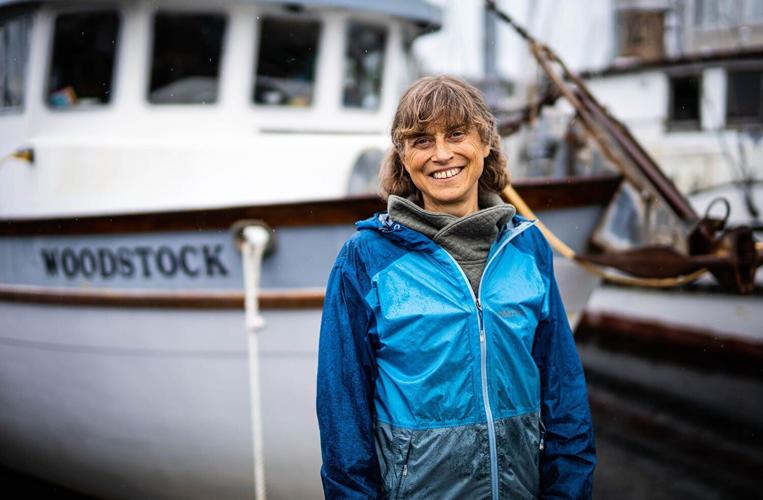
Linda Behnken founded Alaskans Own with a mission to support local fishers, preserve the ecosystem and provide the community with sustainably caught seafood. Photo by Bethany Goodrich.
Since launching Feast and Field, we’ve met many innovative female farmers who are implementing new farming techniques, advancing sustainability efforts and, frankly, giving this male-dominated industry a run for its money. Let’s take a look at some of these women who are not only growing better foods, but growing them for a better future.
Ranae Dietzel has found a comfortable balance between tending the land, minding the animals, raising a family — and making and selling cheese. Photo by Kathryn Gamble.
Ranae Dietzel
We first met Ranae Dietzel in our very first issue, Issue No. 1: Artisan Cheesemaking. Ranae, together with her husband, Kevin, runs the 80-acre Lost Lake farm where they raise around 20 100% foraged-fed cows and produce award-winning cheeses. Ranae holds a Ph.D. in sustainable agriculture and is an agronomy data scientist for Syngenta in Slater, Iowa. Ranae and Kevin not only raise happy, healthy cows together, they practice regenerative, ecological farming — meaning they don’t till, use pesticides or employ synthetic fertilizers (their cows take care of that job!).
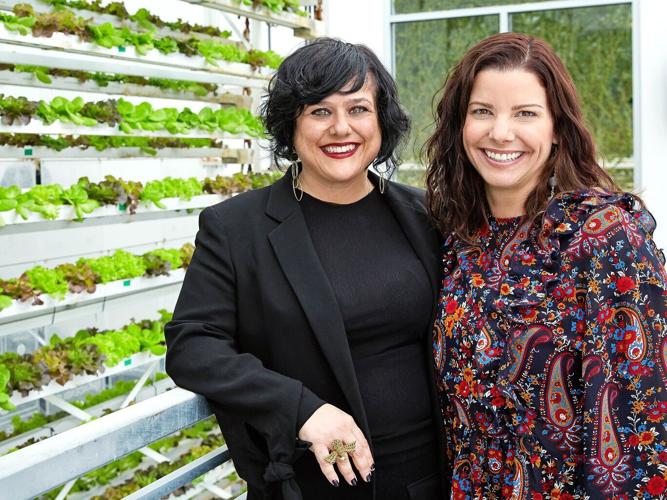
Nona Yehia and Caroline Croft Estay. Photo courtesy of Vertical Harvest.
Nona Yehia, Penny McBride and Caroline Croft Estay
When architect Nona Yehia and sustainability expert Penny McBride pitched the idea for a multi-floor hydroponic vertical greenhouse in Jackson, Wyoming, to a group of fellow farmers and environmental activists, it was met with actual shock. Yehia and McBride — along with their third team member, Caroline Croft Estay — wanted to bring the slow food movement to the Teton region — and they knew just how to do it. Today, Vertical Harvest (featured in Issue No. 7: Microgreens) uses 90% less land, 90% less water and 95% less fuel than traditional agriculture — and it employs a diverse staff (as much as 40% have disabilities).
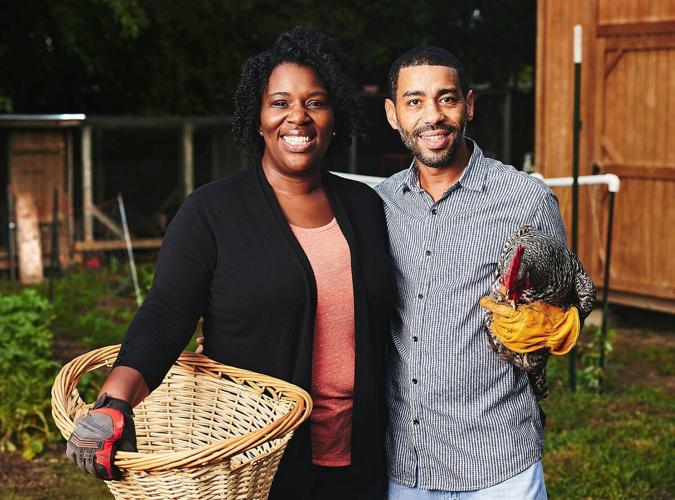
Rachel and Brandon Hawkins on their farm in Kinsey, Alabama. Photo by Alex Workman.
Rachel Hawkins
What began as a simple backyard garden now operates as a thriving CSA offering fresh baskets of produce to 25 household subscribers each season. Husband and wife, Brandon and Rachel Hawkins, run this inspiring operation on just a quarter acre of backyard land in Kinsey, Alabama. We visited Hawkins Homestead Farm in Issue No. 10: At-home Agriculture and were quite impressed when we learned how committed the duo was to never using synthetic herbicides, pesticides, fertilizers or genetically modified seeds. In fact, the farm is completely chemical-free and Certified Naturally Grown.
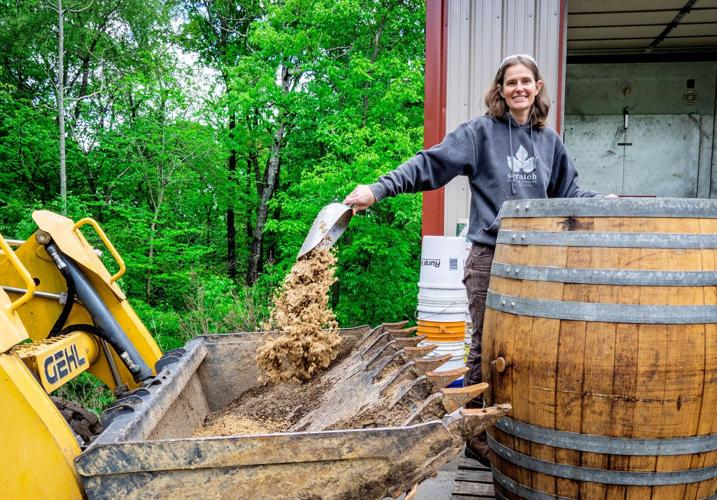
Marika Josephson uses the spent grain from the mashing process for compost. Photo by Zach Straw.
Marika Josephson
When most of us think of beer, we don’t typically think of farming — but Marika Josephson does. As co-founder and co-owner of Scratch Brewing Company, Josephson, along with co-owner Aaron Kleidon, utilize their land to create award-winning farmhouse beer, as seen in Issue No. 11: Foraged Beer. The taste of the brew is totally dictated by what’s growing on the pair’s 75-acre land. Just one year after opening, Outside magazine named Scratch one of the nation’s top forage breweries and two years later, they took home a bronze medal from the Great American Beer Festival. Josephson’s brewing expertise has been honored and she spoke on beer history at the Smithsonian National Museum of American History.
Linda Behnken founded Alaskans Own with a mission to support local fishers, preserve the ecosystem and provide the community with sustainably caught seafood. Photo by Bethany Goodrich.
Linda Behnken
While not a “grower” necessarily, Linda Behnken certainly deserves a spot on this list. With over 40 years of fishing experience under her belt, Behnken helped found Alaskans Own, a non-for-profit community supported fishery (CSF) and membership program that ships boxes of seasonal, premium seafood monthly anywhere in the U.S. Alaskans Own helps bring attention to what it means to be a fisherman or woman — like the commitment to promoting healthier oceans beyond just the physicality of the job. Learn more about this important work in Issue No. 21: Wild Salmon.
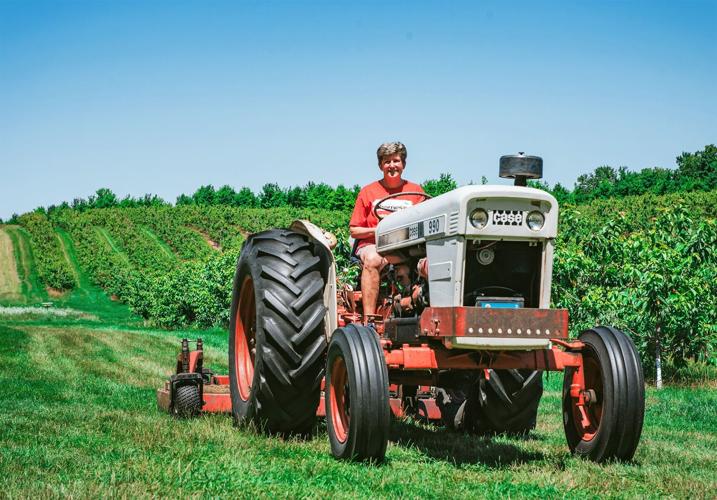
Sarah Hallstedt works the land at Hallstedt Homestead Cherries, located at the tip of Michigan's Leelanau Peninsula. Photo by Beryl Striewski.
Sarah Hallstedt
Along with her husband Phil, Sarah Hallstedt plays a big part in Michigan’s 40% contribution to the country’s entire cherry supply. We traveled to the outskirts of Traverse City in Issue No. 22: Cherries to visit their 53-acre farm and learn more about the challenges of cherry growing in an area faced with climate concerns and rising real estate prices. Lucky for us, the Hallstedt's solution to these issues was to add an agritourism element to their business, allowing visitors the pleasure of a U-pick experience on the farm’s picturesque grounds.
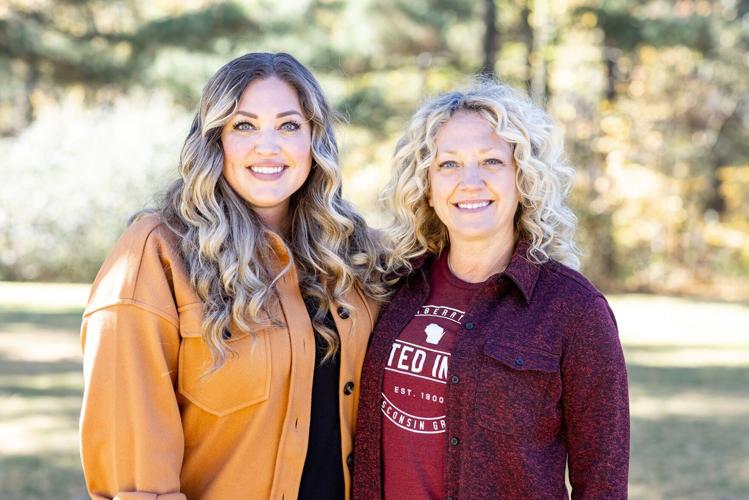
Rochelle Biegel Hoffman and Jamie Biegel. Photo by Jena Carlin.
Rochelle Biegel Hoffman
Cranberries are a big deal in the family of Rochelle Biegel Hoffman, a fifth generation cranberry farmer. In fact, her great-great-grandfather grew his first cranberry way back in 1900. With threats to growing cranberries due to climate, its erratic weather and warming temperatures in Wisconsin, Biegel Hoffman, along with other experts, are working to breed vines that can withstand the changes. She conducts pollinator research for the University of Wisconsin-Eau Claire and is working on a doctorate in sustainability studies. Learn more about Biegel Hoffman’s efforts in Issue No. 38: Cranberries.
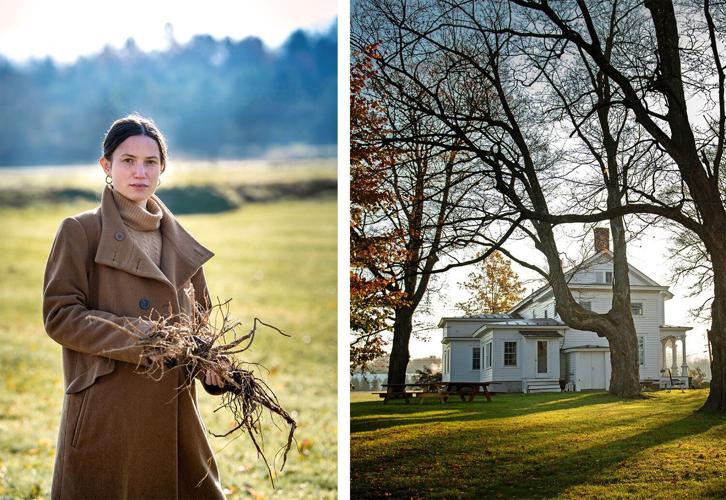
Hudson Hemp co-founder Melany Dobson at Old Mud Creek Farm in New York’s Hudson Valley. Photos by Christine Ashburn.
Melany Dobson
Fueled by her passion for regenerative agricultural practices, Melany Dobson co-founded Hudson Hemp in 2017. The decision to grow hemp was an easy one for Dobson: The plant helps with carbon sequestering, reverses the effects of chemical pollution and decarbonization to improve topsoil health and fertility. It also helps reduce soil erosion that can contribute to climate change. Together with her sister, Freya, and her brother, Ben, and the Hudson Hemp farm team, Dobson focuses on leaving the soil of their Old Mud Creek Farm and Stone House Farm properties better off than they found it. Learn more about Hudson Hemp’s mission in Issue No. 44: Hemp Farming.
Keep it Clean. Please avoid obscene, vulgar, lewd,
racist or sexually-oriented language. PLEASE TURN OFF YOUR CAPS LOCK. Don't Threaten. Threats of harming another
person will not be tolerated. Be Truthful. Don't knowingly lie about anyone
or anything. Be Nice. No racism, sexism or any sort of -ism
that is degrading to another person. Be Proactive. Use the 'Report' link on
each comment to let us know of abusive posts. Share with Us. We'd love to hear eyewitness
accounts, the history behind an article.


(0) comments
Welcome to the discussion.
Log In
Post a comment as Guest
Keep it Clean. Please avoid obscene, vulgar, lewd, racist or sexually-oriented language.
PLEASE TURN OFF YOUR CAPS LOCK.
Don't Threaten. Threats of harming another person will not be tolerated.
Be Truthful. Don't knowingly lie about anyone or anything.
Be Nice. No racism, sexism or any sort of -ism that is degrading to another person.
Be Proactive. Use the 'Report' link on each comment to let us know of abusive posts.
Share with Us. We'd love to hear eyewitness accounts, the history behind an article.