Scotch, bourbon, single malt, rye: You know they’re delicious, but do you know their definitions? And what's the deal with whiskey versus whisky? For top-shelf knowledge of these distilled delights, brush up on the finer points of the distinctive spirit below.
Whiskey vs. whisky: No, it’s not a typo. Both words refer to a spirit distilled from malted grain, but “whiskey” is made in the United States or Ireland, while “whisky” comes from Scotland, Japan or Canada. Need a simple mnemonic device to remember it? "United States" and "Ireland" have E's in their name, just like "whiskey"—easy.
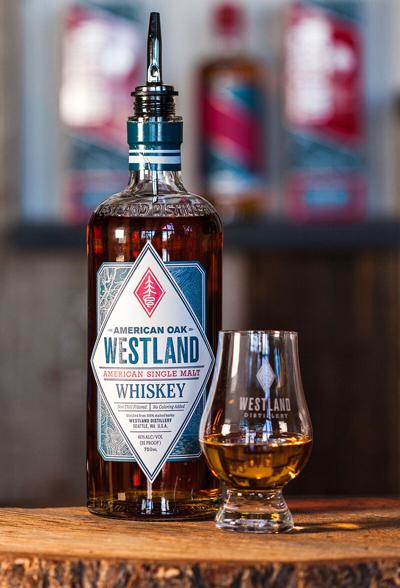
Westland Distillery’s signature American Oak single malt whiskey.
Scotch: Scotch is whisky from Scotland that has been made with malted barley, other malted or unmalted cereal grains, or a mixture of both, and aged in oak barrels for at least three years. Flavor profiles vary greatly depending on how it’s made. It might contain notes of vanilla, caramel, chocolate, butter, spice, honey, nuts or fruit. Sometimes peat fires are used to dry the barley, which lends an earthy, smoky flavor.
Single malt: This term refers to whisky or whiskey that's been made solely from malted barley and is produced at a single distillery. Traditionally, single malt is associated with Scotch, but it can be made anywhere in the world. A new category called "American single malt whiskey" has been emerging over the last several years and some distilleries, like Westland Distillery, are advocating for it to be deemed a legally defined category, like bourbon.
Bourbon: Bourbon is a type of American whiskey. To be legally sold as bourbon, whiskey must be distilled from a grain mixture that is at least 51% corn, aged in new charred-oak barrels, distilled to no more than 160 proof, put into barrels for aging at no more than 125 proof and bottled at a minimum of 80 proof. Many people believe bourbon must be made in Kentucky, but that isn't actually true—it can be made anywhere in the U.S. Due to its corn base, bourbon tends to be fuller-bodied, sweet and a bit smoky, with caramel and vanilla flavors.
Rye whiskey: Rye whiskey's requirements are identical to those of bourbon except that its mash bill (the mix of grains used for fermentation) must be made up of at least 51% rye. The flavor is usually drier and spicier than bourbon.
Irish whiskey: In addition to being made in Ireland, Irish whiskey must be aged in barrels for at least three years, like Scotch. Most are also triple-distilled. It tastes similar to bourbon because of its time in the barrel, but is often considered lighter, smoother and less sweet.
Japanese whisky: The Japanese studied the craft in Scotland and carried over many of the same practices in the 1920s, such as using malted barley and aging in wood barrels, so it’s often analogous to Scotch. However, while each Scottish distillery tends to produce only one kind of distillate (which may be used on its own as a single malt or in a blend with whisky from other distilleries), some Japanese distilleries make many different whisky styles using various mash bills, stills and casks which they will blend together for a light, complex and well-balanced final product. Next month, the Japanese whisky industry will be implementing new regulations specifying Japanese whisky has been produced with malted grain and water from Japan. The distillation, aging and bottling processes must all take place within its borders, and the whisky must mature in wooden barrels for at least three years.
Keep it Clean. Please avoid obscene, vulgar, lewd,
racist or sexually-oriented language. PLEASE TURN OFF YOUR CAPS LOCK. Don't Threaten. Threats of harming another
person will not be tolerated. Be Truthful. Don't knowingly lie about anyone
or anything. Be Nice. No racism, sexism or any sort of -ism
that is degrading to another person. Be Proactive. Use the 'Report' link on
each comment to let us know of abusive posts. Share with Us. We'd love to hear eyewitness
accounts, the history behind an article.



(0) comments
Welcome to the discussion.
Log In
Post a comment as Guest
Keep it Clean. Please avoid obscene, vulgar, lewd, racist or sexually-oriented language.
PLEASE TURN OFF YOUR CAPS LOCK.
Don't Threaten. Threats of harming another person will not be tolerated.
Be Truthful. Don't knowingly lie about anyone or anything.
Be Nice. No racism, sexism or any sort of -ism that is degrading to another person.
Be Proactive. Use the 'Report' link on each comment to let us know of abusive posts.
Share with Us. We'd love to hear eyewitness accounts, the history behind an article.