Keep it Clean. Please avoid obscene, vulgar, lewd,
racist or sexually-oriented language. PLEASE TURN OFF YOUR CAPS LOCK. Don't Threaten. Threats of harming another
person will not be tolerated. Be Truthful. Don't knowingly lie about anyone
or anything. Be Nice. No racism, sexism or any sort of -ism
that is degrading to another person. Be Proactive. Use the 'Report' link on
each comment to let us know of abusive posts. Share with Us. We'd love to hear eyewitness
accounts, the history behind an article.
(The Center Square) – Less than three weeks out from Election Day, Democrats are ramping up their rhetorical attacks on Republicans, tapping into U.S. voters’ affordability concerns.
Two years into the second Trump administration, the country “needs dramatic change,” House Minority Leader Hakeem Jeffries, D-N.Y., told reporters Friday.
“We were promised that costs would go down on day one, but costs haven't gone down,” Jeffries said. “Life has gotten way too expensive, and [President Donald Trump’s] tariffs have unfortunately increased costs on everyday Americans by thousands of dollars per year.”
Jeffries added that Democrats are “committed to making sure your taxpayer dollars are actually spent in a way that makes your life more affordable.”
Democrats have primarily hammered their opponents over rising costs of gas and groceries – due mostly to Trump’s tariffs and the ongoing U.S.-Iran conflict – as well as rising healthcare plan costs, which they claim are due to Republicans’ refusal to renew the expansion of certain Obamacare subsidies.
The Premium Tax Credit, temporarily boosted during the COVID-19 pandemic, reverted to original levels last year after a grueling government shutdown, where Democrats refused to fund the government for 43 days over demands that Republicans renew the sunsetting pandemic extension.
The PTC is a subsidy that goes directly to health insurance companies. Those companies are supposed to use 80% of it to lower ACA marketplace enrollees’ monthly premiums and are allowed to keep 20% of the money for overhead costs and profit.
Extending the enhanced portion of the subsidy would have cost at least $350 billion over the next ten years, according to the Congressional Budget Office.
A Government Accountability Office report had also uncovered systemic fraud risk in the enhanced subsidies. More than 90% of GAO’s fake applicants received coverage, with GAO noting that “agents and brokers have a financial incentive to maximize enrollments” under the tax credit system.
Democrats, however, accused Republicans of “stripping healthcare away from Americans,” a message many have continued to voice in their 2026 midterm campaigns.
With control of Congress at stake, Republicans point to massive tax cuts in their signature “One Big Beautiful Bill Act” as evidence that they are addressing cost of living concerns. They also argue that tariffs are promoting the domestic manufacturing industry and overall economic growth.
“President Trump’s America First agenda and Republican policies are spurring a resurgence of American industry. In fact, we added 72,000 manufacturing jobs in 2026 alone and factory wages have increased by 7.9%,” House Budget Committee Chairman Jodey Arrington, R-Texas, stated. “Together, we’re ushering in the Golden Age of America.”
Republicans have also highlighted the growing numbers of Democratic Socialist candidates on the 2026 ballot, which they argue is indicative of rising extremism in the Democratic party.
“This election is going to be between ‘we’ and ‘they,’ Sen. Ted Cruz, R-Texas, posted on social media Friday. “If you are a communist, transgender witch, vote Democrat. But if you’re a trucker diver, steel worker, farmer, rancher, waiter, cop, firefighter, oil field worker, mom, or dad, show up and vote Republican!”
Lawmakers urge more nonprofit security funding after threat
(The Center Square) – Some legislators are calling for more taxpayer funding of nonprofit security grants after a potential mass shooting was averted in the Chicago suburbs.
U.S. Rep. Raja Krishnamoorthi, D-Illinois, said he and countless other families were at the Balaji temple in Aurora on Oct. 10 to mark the beginning of one of the most important holidays in the Hindu religion, when an alleged shooter was in the parking lot with 300 rounds of ammunition.
“He took one shot at a passerby, and according to the police, his gun jammed,” Krishnamoorthi said at a news conference Friday in Chicago.
Krishnamoorthi said the suspect informed a co-worker that he was going back to finish the job, but the co-worker informed police, who arrested Alexandros Paporakis, 19, as he was leaving his home in Palatine that night.
“According to court documents, the manifesto that he wrote described Indians, Jews, Black people and other minorities as, quote, sub human,” Krishnamoorthi said.
The congressman said the shooter was radicalized by social media, where silos of communities develop and vent hate.
“And they reinforce each other, driving up engagement and driving up profit for those tech companies, so they are profiting off of hate. But what we know is that hate doesn’t just stay on the internet, it transforms into violence,” Krishnamoorthi said.
Krishnamoorthi said Congress should close the immunity from liability loophole that Big Tech companies enjoy under Section 230 of the Communications Decency Act.
U.S. Rep. Brad Schneider, D-Deerfield, said the federal investment has grown from $300 million to $500 million, but the Jewish community is doing more.
“$1 billion is being invested in security, one community, $1 billion across the country because of the threats we’re facing,” Schneider said.
Schneider said he is a proud Jew who has lived his whole life under the shadow of going to synagogue with armed guards.
Krishnamoorthi said the federal government has withheld nonprofit security grants for “purely political reasons.”
State Sen. Ram Villivalam, D-Chicago, said Illinois’ nonprofit security grant program provided $20 million in its first year, plus subsequent funding, but more is needed.
“As we start our budget conversations, looking through opportunities to fund this program at a higher level and get this funding out the door quicker to the communities that are especially experiencing hate is a top priority,” Villivalam said.
Illinois’ Not-for-Profit Security Grant Program provides up to $150,000 per site for security upgrades to eligible nonprofits who are deemed at high risk of a threat, attack or acts of terrorism.
NCAA sues DeWine over eligibility executive order
(The Center Square) – The NCAA on Friday sued Ohio Gov. Mike DeWine in federal court after the governor issued an executive order earlier this week giving Ohio colleges and universities the option to expand the eligibility options for some student-athletes.
“In June, the NCAA adopted a new eligibility model, giving all otherwise eligible student-athletes up to five years of competition,” DeWine said in a statement.
Under the new rules, eligibility starts the academic year after a student turns 19 or when first enrolled full-time in college, whichever comes first.
“Under the NCAA’s implementation guidance, however, student-athletes who graduated from high school in 2022 and have already completed four seasons of competition are denied a fifth season,” DeWine said.
The controversy is over fairness, DeWine said,
"When the rules change, fairness has to remain part of the equation," DeWine said. "We want Ohio's student-athletes to have the same opportunity as student-athletes in other states."
The NCAA said Friday it took the “extraordinary” step of suing DeWine because the order would give Ohio schools an advantage.
“This action was necessary following the governor’s issuance of an executive order that attempts to compel Ohio colleges and universities to ignore NCAA eligibility rules to the disadvantage of thousands of student athletes and institutions across the country,” the NCAA said in a statement.
The lawsuit cited several constitutional violations in DeWine’s order, including the First Amendment by “purporting to provide Ohio institutions with legal cover to maintain their NCAA membership while simultaneously flouting the NCAA’s rules. The Executive Order is unlawful because Governor DeWine lacks the authority to permit Ohio colleges and universities to disregard the rules they have agreed to follow by rostering ineligible student-athletes.”
DeWine declined to comment on the lawsuit, his spokesman, Dan Tierney, told The Center Square.
New White House press secretary is out
(The Center Square) – Katie Zacharia is out as White House press secretary, a White House official confirmed to The Center Square Friday.
President Donald Trump told reporters Friday he had allowed Zacharia to “reconsider” the role, and the White House confirmed shortly afterward that Zacharia was “transitioning out” of the job.
She spent just five days in the role and held her first White House press briefing Tuesday. Zacharia took questions from only three reporters, one of whom was chosen by the White House for its new media seat, and wrapped up the briefing in roughly 15 minutes.
Zacharia came to the White House from Trump Media & Technology Group, the parent company of Truth Social, where she worked as a senior communications adviser, according to her LinkedIn profile. Although she graduated from Pepperdine University's law school in 2011, her legal credentials came under scrutiny amid reports that she was never admitted to practice law in the United States. Zacharia acknowledged Thursday on Fox News' "Hannity" that she failed the California bar exam but has maintained that she worked in international transactional law in China.
Zacharia replaced former White House press secretary Karoline Leavitt after Leavitt resigned, citing a desire to spend more time with her family.
Education experimenters press forward as states opt for federal school choice
(The Center Square) – Public education looks different from what it once did 50 years ago. Or 25 years ago. Or even six years ago.
Back then, just before the pandemic, Janine Yass and her husband, Jeff, prominent billionaire philanthropists who support school choice programs, were donating seed money to educators experimenting with different types of learning for students.
They were looking for programs that differed from the status quo, just as their Boys Latin of Philadelphia Charter School did when it opened in 2007. Twenty years later, the institution enrolls 800 students from sixth to 12th grade in a college preparatory curriculum. Nine out of 10 students graduate from high school, three-quarters of students are economically disadvantaged, and more than one-third receive special education services.
In the School District of Philadelphia, where most of their students come from, only three out of 10 are grade-level proficient in math and reading. Public education lobbyists and the lawmakers they bankroll say the hollowing out of neighborhood schools happened because state funding lagged the true cost of education. Students walk under asbestos-insulated ceilings, water fountains can be too polluted to use, and bathrooms lack toilet paper.
Enrollment at district schools has fallen 13% over the last decade and could decline another 10% by 2035. Meanwhile, alternative choices – charter schools, both in the city and online, as well as private options – have grown in popularity among families seeking a customized curriculum, spiking 191%. Whether it's college-level preparatory, life skills for children with disabilities, or art and music programs, the offerings have cannibalized roughly one-quarter of the city’s student population.
But, Yass said, the movement of children out of public schools, where math and reading proficiency had also cratered in many parts of the country, was accelerating faster outside Pennsylvania than inside. State regulation limited the number of charter schools that could operate, and districts had to agree to their contracts. It was often an expensive and fruitless endeavor, Yass said.
Over time, her focus shifted outward.
“We started taking our efforts to other cities,” she told The Center Square. “Not intentionally. Just really because it was easier and there are plenty of underserved children in states that we would be welcome to.”
And then the pandemic happened. Yass’ “ad-hoc” approach to school choice philanthropy was soon overwhelmed by requests from programs across the nation needing support for an influx of students.
And so, the Yass Prize was born: an annual contest that awards grants of up to $1 million to applicants across the country. Earlier this month, the foundation awarded $6 million to recipients, including $1 million each to The Learning Lounge in Pine Bluff, Ark., and the Salt & Light Academy in Philadelphia. Two other Pennsylvania schools, Cooking4Autism and Girard College, won $50,000 each.
Since 2021, 285 schools serving 14 million students have collected a total of $84 million.
Arizona Autism Charter Schools has expanded into seven campuses since it won $1 million in 2022. Its founder, Diana Diaz-Harrison, went on to serve as deputy assistant secretary for Special Education and Rehabilitative Services at the U.S. Department of Education.
Supporters of school choice believe that these programs will place more power in the parents to utilize funds that are directly catered to their children's educational needs with the goal of increasing student achievement.
The average cost of a school choice scholarship is roughly $6,000 per student, compared with about $18,000 in average public-school spending, according to EdChoice. The Trump administration’s federal school choice tax credit program, of which 31 states have opted into, would allow individuals and married couples to contribute up to $3,400 to scholarship organizations to cover tuition and other educational expenses costs for students.
In a recent interview with The Center Square, Arizona Superintendent of Public Instruction Tom Horne said “it’s not a partisan issue.”
“It is a real opportunity to further empower parents in finding the best education for their children,” he said. “ Who doesn’t believe that parents should have that chance.”
So far, Pennsylvania Gov. Josh Shapiro has not signed onto the program, even as New York Gov. Kathy Hochul gave her final approval earlier this month. He said on the Oct. 7 debate stage that he hadn’t closed the door on the program and would be making an announcement about it “soon.”
Treasury officials and the Internal Revenue Service estimate the program could support nearly 700 organizations and generate $26 billion in annual contributions from more than 11 million taxpayers by 2030.
Darla Romfo, president and CEO of Children's Scholarship Fund, an organization participating in the tax credit program, said taxpayers who donate can direct their support toward scholarships for students.
Romfo said states that do not participate could see tax credit donations benefit students from other states.
“All this money was raised from taxpayers in your state, and it got spent on kids all over the rest of the country and not on your kids, because you didn't opt in,” Romfo told The Center Square. “And it wouldn't have cost you anything to opt in, wouldn't have taken $1 away from a public school. It would just simply help the kids in your state. And that was money that left your state and could have helped your kids.”
“Shame on them, because it costs them nothing,” Romfo said of states that have declined to participate.
Jorge Elorza, CEO of Democrats for Education Reform and advocate for school choice, told The Center Square that Democrats have fallen behind both politically and policy-wise on K-12 education.
“Voters are watching. They see that we have been silent on this issue," Elorza said. "Now there is a political imperative for us to reprioritize and refocus on K-12 education. And it can’t be more of the same. It can’t just be more money to be more of the same. That is not working.”
Esther Wickham contributed to this report.
Whitmer delegation spent more than $200,000 on Asia trip
(The Center Square) – Michigan Gov. Gretchen Whitmer and her delegation spent more than $200,000 on an eight-day trip to Asia in September, averaging $26,000 per day.
This is according to records obtained by The Center Square through a Freedom of Information Act request filed with the Michigan Economic Development Corp..
The MEDC and the Michigan Economic Development Foundation, an independent, nonprofit organization, “supported” the trip, according to the governor’s office.
In total, the trip cost $91,000 for airfare, nearly $70,000 for hotel accommodations, $13,000 for conference rooms and events, $11,000 for ground transportation, and $6,000 for meals. Other miscellaneous expenses included photographer fees, interpretation services, and $3,200 for a “cultural activity.”
Whitmer argued the trip to South Korea and Taiwan was critical for the state’s business relations.
“Michigan and Taiwan are both places where people know how to make things, solve tough problems, and build the technologies that will define our future,” Whitmer said. “We’re going anywhere and working with anyone to bring more jobs, investments, and opportunity back home to Michigan.”
As previously reported on by The Center Square, Republicans have criticized Whitmer’s international travels.
Earlier this year, the governor took a week-long trip to Europe, spending approximately $180,000. That came after a $61,000 January trip to Switzerland.
Whitmer’s office defended her Asia trip for “building on strong partnership to bring jobs and investment to Michigan.”
The trip began in South Korea, with day one including a “cultural walking tour” of “traditional Korean homes” and a local shopping district. This is according to the official itinerary shared with The Center Square via the records request.
The rest of the time in South Korea included meetings with Korean companies that have recently invested in Michigan and meetings with government officials.
“Investment missions allow Team Michigan to build the trust that turn conversations into opportunities for Michigan’s people, communities, and businesses,” said Quentin L. Messer, Jr., CEO of MEDC, who joined Whitmer on the trip. “During this mission, we deepened relationships with companies already investing in Michigan while positioning our state to compete for future investment.”
After three nights in South Korea, the delegation flew to Taiwan, where members met with President Lai Ching-te, government officials, and representatives of semiconductor, drone, and robotics companies.
“Michigan is a global hub of the automotive industry, excelling in smart mobility, automotive software, information and communications technology, and industrial automation, which are highly complementary with Taiwan’s semiconductor, electronic components, and smart manufacturing industries,” said Ching-te. “As a result, an increasing number of Taiwanese enterprises are investing and expanding their presence in Michigan . . . I anticipate that the governor’s visit will bring about more Taiwan-US industrial cooperation, so that together we can enhance supply chain resilience and reinforce each other’s technological and industrial security.”
The trip marked Whitmer’s third visit to Taiwan in three years. She was accompanied by a delegation of more than a dozen people. Those included eight officials from MEDC, two from the governor’s office, and:
• David Coulter, county executive of Oakland County
• Paul Rogers, the adjunct general of the Michigan National Guard
• Charles Marshall, II, president of ITC Michigan
• Marc Corriveau, Sr. vice president & chief government relations officer at Henry Ford Health System
Whitmer applauded the trip as a success.
“Michigan is competing on the global stage, and the best way to win is to build relationships and make sure companies know what we bring to the table,” Whitmer said. “In South Korea and Taiwan, we deepened our relationships with companies already creating good-paying jobs in Michigan, and showed others considering where to make their next investment why our state is the best place to build the future.”
Trump endorses Tafoya in closely watched Minnesota U.S. Senate race
(The Center Square) – President Donald Trump has endorsed Republican and former sports broadcaster Michele Tafoya in Minnesota’s U.S. Senate race.
“You have to vote for Michele Tafoya, who is a very respected person,” Trump said during a rally in Ohio on Monday. “It’s hard to win because they cheat in their elections. I thought I won Minnesota three times.”
This endorsement comes just three weeks until Election Day.
Tafoya, who is running against Democrat Minnesota Lt. Gov. Peggy Flanagan, has since downplayed the endorsement, saying she “heard about that.”
“This campaign is about bringing all Minnesotans together whether they voted for President Trump or whether they voted for Kamala Harris,” Tafoya added.
That hasn’t stopped Flanagan’s campaign from using the endorsement to criticize Tafoya, saying she is “lockstep with Trump’s MAGA agenda.”
“Donald Trump wants you to vote for Michele Tafoya,” Flanagan said. “I'm asking you to vote for the future Minnesotans deserve—one without Trump's chaos and cruelty. That's the choice in this race.”
Tafoya and Flanagan are neck and neck in the most-recent polling of Minnesota’s U.S. Senate race.
Flanagan currently leads Tafoya 44.8% to 43.3%, according to the average of the four most-recent polls compiled by 270toWin. That is well within the margin of error.
According to the Cook Political Report, the Minnesota U.S. Senate race is predicted to be likely Democrat. It is expected to be one of the bellwether races set to determine the balance of congressional power.
Of the 100 seats in the U.S. Senate, 33 are up for regular election in 2026, along with two special elections. Democrats currently hold 13 of the seats on the ballot, while Republicans hold 22. That means this election cycle will determine which party controls the 120th Congress.
A Republican candidate has not won a U.S. Senate seat in Minnesota since 2002. Tafoya hopes to be the first, labeling herself a political outsider.
“Minnesotans are rejecting Peggy Flanagan’s record of failure,” she said. “Gang violence. Rampant fraud. Declining test scores. All on her watch as lieutenant governor. It’s time for an outsider.”
Flanagan, who has served alongside Gov. Tim Walz since 2018, is running amid ongoing concerns over fraud in the state.
“Peggy Flanagan stood beside Tim Walz for eight years while Minnesota suffered billions in taxpayer dollars lost to fraud, a free-fall in academic performance, and rising crime,” Tafoya said. “Now she wants a promotion to the U.S. Senate. Eight years of failure doesn’t deserve a promotion.”
Flanagan has called out Tafoya for supporting President Donald Trump, calling her a “yes vote” for him if elected.
“We have a choice, Minnesota,” Flanagan said. “Do you want a Senator who will work for you to lower costs, end the illegal war in Iran, and hold ICE accountable? Or do you want another Senator for Trump?”
Election Day is 18 days away, but absentee ballots have already been distributed statewide, and early voting begins today.
Nurses say technology is making their jobs and patient care worse
Khari Johnson for The Markup
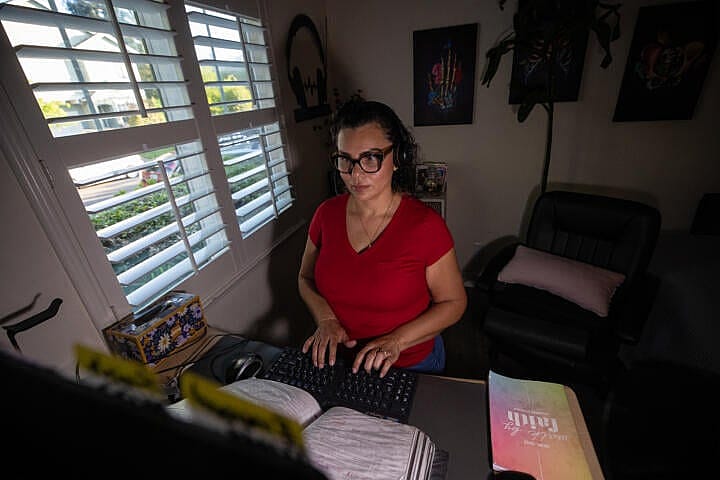
Kaiser Permanente nurses who answer advice and triage calls say their duty of care for patients is being increasingly threatened by workplace surveillance.
Seven current and former nurses told The Markup that those who spend more than 15 minutes on a call with a patient routinely face criticism from Kaiser management or get called into performance evaluation meetings. Call time, they said, factors into monthly performance scores they receive.
In addition to tracking call length, they said Kaiser uses software that tries to predict on a daily basis whether they’re being unproductive or failing to answer calls quickly. Artificial intelligence systems have also been used to rate their empathy and tone of voice.
Their comments come as the California Nurses Association begins negotiating a new contract with Kaiser this month with AI a likely issue. Kaiser nurses went on strike against AI for one day in March and picketed against AI last fall. The CNA is bargaining for 25,000 nurses, including 1,000 in call centers.
At the same time, California lawmakers are considering several bills regulating AI in the workplace, including one that would protect from retaliation doctors and nurses who override automated care recommendations.
Kaiser defended its use of AI, saying it deploys the technology with human oversight and with patient safety in mind. It said it does not use “average handle time” to assess performance.
Kaiser Permanente is the largest private employer in California, providing healthcare services to more than 9 million people in the state and to 3 million other Americans. That means the company’s use of artificial intelligence could set important precedents for managing workers with AI. It could also have a big impact on patient care, providing an early example of how the healthcare sector balances cost-cutting automation with human presence or touch.
Raquel Alvarez Sanchez, a Kaiser Permanente advice nurse in Vallejo since 2010, said she was on a call with a patient who was suicidal last year that took more than an hour because she had to wait for police to arrive before hanging up. She tried to make the man feel cared for, even though she was cognizant that staying on the call that long would throw off her average call time for weeks and could lead to questions from management. Sanchez, a union steward, said she’s accompanied colleagues to performance evaluation meetings, where they were found to have done everything right on a call — except staying on the line for more than 15 minutes. She said she hasn’t seen nurses get fired for doing that, but she fears that continued pressure can lead nurses to quit or retire early.
“I think at some point all of the nurses have been talked to about their average handle time,” she said. “The only thing I can think of is they’re doing it for profit.”
Another nurse who spoke with The Markup on condition of anonymity due to fear of retribution described how that surveillance affected a call with a patient last year. Initially, she thought her patient, an elderly woman who just received a terminal cancer diagnosis, was suicidal, but quickly came to understand that she was in shock and really needed somebody to talk to.
The nurse wanted to take time to show compassion or comfort to the woman, who acts as a caretaker for her daughter, but she stopped herself out of fear it would hurt her monthly performance score and lead to a reprimand from her manager. She became a nurse to provide people with compassionate care, but “I had to ask myself: Am I going to get disciplined for going off script or saying more than what is necessary?”
Chad Surmick for CalMatters
Kaiser Permanente says its performance evaluations help improve patient outcomes. A company spokesperson said, “Kaiser Permanente does not use Average Handle Time to assess agent performance or enforce call time metrics. Any tools used in contact center settings support our quality assurance efforts and have human review and oversight.” In a statement provided to The Markup and CalMatters, spokesperson Vincent Staupe added that Kaiser uses AI responsibly, with human oversight, and by “prioritizing patient safety, privacy, and equity,” but he said, “As a large organization, we do not share specific information about internal technology systems for security and operational reasons.”
Is technology putting patients at risk?
It’s not clear how patient care is affected by algorithmic management, nor is the impact of limiting the length of triage and advice calls on patients. Kaiser call center nurses can’t say for certain whether the pressures they face result in adverse outcomes for patients because their contact with patients ends after they hang up the phone. A 2024 public records request by CalMatters to the California Department of Managed Health Care found no complaints by patients against Kaiser related to call times. But nurses insist the risk to patient safety and quality of care is real.
Consumer Watchdog patient advocate Michele Ramos said many Kaiser patients begin their care on the advice line. They later complain to her, mostly about things that happen in Kaiser facilities, but “I can see now where a lot of the problems” start, given the call constraints nurses are under.
Ramos said the time pressures may fit a broader pattern at Kaiser of putting costs over quality. The health giant was hit with a record fine, $50 million, as part of a settlement over findings from the California Department of Managed Health Care that it delayed behavioral health appointments beyond statutory limits and too often moved patients into group rather than individual therapy. Kaiser also settled with the U.S. Department of Labor after investigations into its substance use and mental health services. Kaiser faced criticism in 2002 for paying bonuses to call center workers who aren’t nurses for keeping calls short, though call center nurses who spoke with The Markup and CalMatters said they encountered no such practices today.
“Kaiser’s been known through the years to manage dollars over managing care, and I think this would be a contributor to that, which is only going to fail patients,” Ramos added.
Nurses said they are pressured to stay under 15 minutes even for the sorts of calls that often take more time, like diagnosing a patient with multiple symptoms, chronic illnesses, new parents in need of advice and assurance, people who desire extended health education, or people who are overwhelmed after receiving life-altering news who could use some compassion. Nurses say calls that involve interpreters often take 30 minutes or more. About four in 10 Californians speak a language other than English and half of them do not speak English well, according to a state environmental health agency.
“The amount of time that Kaiser is giving us to complete a call is sometimes not safe,” said one nurse, who asked to remain anonymous due to fear of retaliation.
“People can get hurt,” said Charlotte Capulong, who has worked in nurse call centers for 22 years and helped organize Kaiser nurses against the AI tone-of-voice tool. Capulong said nurses felt harassed by managers in meetings she attended as a union rep, even if they successfully carried out all other duties of their jobs except completing calls within 15 minutes.
“You aren’t calling Comcast. We’re dealing with life here,” she said.
Rahul Lal // CalMatters
Nurses are instructed to stick to a script on phone calls and give no more than two to three pieces of advice, Capulong and other nurses said, which means they may sometimes need to decide whether to withhold advice or face a performance evaluation hearing.
The nurses say artificial intelligence could make the surveillance nurses encounter on the job worse.
In summer 2024, Kaiser began testing an AI tool that attempts to assess empathy and tone in the voices of nurses and patients, according to nurses who spoke with The Markup and CalMatters. In response, nurses circulated and signed a petition in favor of the right to patient privacy, more transparency, and the right to exercise their professional judgement and encouraged management to involve nurse’s input and feedback. The signature campaign used the same tag line that nurses used at protests outside San Francisco hospitals earlier that year: “Trust nurses, not AI. The AI tests ended in November 2024, but union representatives were told that managers may bring the program back in the future.
Nurses reported feeling harassed by existing surveillance, “and that was intensified when they said we’re going to use AI to evaluate our calls and grade us,” said Sanchez.
Another nurse speaking on condition of anonymity said “AI did not understand our job and would grade us wrong all the time.”
A Kaiser spokesperson declined to respond to questions about the AI tool or answer questions about the use of AI and other automated systems in the company’s call centers and healthcare facilities, including for evaluating nurse performance or whether patients were informed about the use of AI to evaluate their empathy and tone.
Nurses also said they get little time between calls, even if that call involves speaking with a patient who is suicidal, experiencing a mental health episode, or near death. In years past, nurses got around 10 minutes to finish writing notes in a patient’s chart or collect themselves after a particularly tough call. Today they say they typically get 30 seconds or less when lines are busy, although more at slow times, like late at night, or if they get a manager’s permission after a particularly challenging call. The overall pace, they say, can lead to mistakes like missing important cues into a patient’s wellbeing.
CNA reps declined to talk about specific provisions they intend to seek related to AI ahead of their talks with Kaiser this summer.
How surveillance and AI shape nursing
Critics say excessive workplace monitoring can lead to lower morale as employees feel less trusted and autonomous, relegated to being no more than algorithm monitors. UC Berkeley Labor Center Technology and Work Program director Annette Bernhardt has warned that algorithmic management can turn people into fleshy robots, echoing complaints from an Amazon factory worker who The Markup and CalMatters interviewed last year. A 2023 academic survey of call centers in four developed countries found that using AI for management or monitoring left workers with less time between calls and more likely to feel emotionally drained by their work. Nearly half of respondents said that AI tools made their jobs more stressful. A prior study by the same researchers, Virginia Dolleghast of Cornell University and Sean O’Brady of McMaster University found that performance monitoring leads to higher rates of emotional exhaustion.
Dolleghast, who has studied the impact of surveillance technology on call center workers for more than a decade, said what Kaiser call center nurses are experiencing is part of a broader trend: Across different industries, persistent surveillance is increasing stress levels for workers who are resolving complex, emotionally-charged issues.
“Stress and burnout can lead to more mistakes across a range of areas, and in the healthcare setting that is much higher risk because you’re dealing with people’s lives and their health,” she said.
The converse can be true: Workers who are given more discretion to decide the pace and timing of their work experience higher levels of job satisfaction and less absenteeism.
Nurses nationwide are more frequently encountering artificial intelligence and similar software systems in the workplace. Half of more than 2,000 nurses who responded to a 2024 survey by the National Nurses United union said their employer uses algorithmic systems to analyze health records. Such systems can do things like determine how fragile a patient is or predict how many hours of care they will need. Two-thirds of the surveyed nurses said their own assessments had at some point disagreed with a computer-generated prediction. Six out of 10 respondents said they don’t trust their employer to prioritize patient safety when using AI.
Pa Vue has worked as a nurse in call centers for the better part of the past decade. She said she and other Kaiser nurses routinely have conversations with managers about call efficiency and receive evaluation scores once a month. She recalls having a score reduced for repeating advice to a patient that she worried had unusual symptoms and possible heart issues.
As a union representative in some performance meetings, Vue has seen managers raise efficiency questions about calls they deem too long. She’s also seen nurses receive lower performance scores if they go against software recommendations based on their professional opinion or make an appointment for a patient without consulting a doctor.
She believes that efficiency aims accelerated by technology can hinder a nurse’s ability to focus and reduce the quality of care that patients pay for.
“I’m not against the use of AI as long as it’s beneficial to the patient but in this particular use [empathy and tone monitoring] it’s to increase productivity and improve efficiency and cut costs. Kaiser is forgetting we aren’t just a call center for customer support, we’re nurses, and we’re there to take care of patients,” she said.
National Nurses United and CNA President Cathy Kennedy sees the use of AI to detect nurse empathy as part of a long series of steps by Kaiser to limit their autonomy and make them more efficient. She believes AI threatens to automate and fragment the work that nurses do, and companies developing and deploying AI systems should establish that those systems are effective and equitable before deploying them.
Martin do Nascimento // CalMatters
Notification of new tech deployments is part of the nurse union’s contract with Kaiser but sometimes nurses don’t receive notification, CNA says. So union leaders are attempting to track the number of AI models in use at Kaiser Permanente, advising its members to inform them when they encounter new tech. This paves the way for CNA to push back as it did with the empathy and tone AI last summer or as it did when it stopped a pilot program that would have replaced nurses that sit at the bedside of confused patients with cameras.
Debru Carthan, a Kaiser radiologist, is on the front line of worker-management fights over AI at the company. A member of Service Employees International Union, she is also part of the Coalition of Kaiser Permanente Unions, where she sits on a committee to discuss use of AI and emerging technology at Kaiser. The coalition also has a “see something, say something,” campaign for frontline workers to report when they notice AI deployments; the coalition says that too often management quietly implements AI into workflows without notice or worker input. She worries that the AI tone detector used on advice nurses could discriminate against nurses from different cultures and has come to believe that the use of AI in healthcare generally has more to do with money and corporate greed than patient care.
California lawmakers have responded to worker AI concerns both inside and outside the healthcare sector. They tried and failed last year to address how AI impacts workers like call center nurses. Assembly Bill 1018 and Senate Bill 7, two bills endorsed by the CNA, would have required employers to inform workers before using automated systems on the job to do things like promote or discipline workers or evaluate job performance, but Gov. Gavin Newsom vetoed SB 7, and, facing strong opposition from companies including Kaiser Permanente, AB 1018 failed to pass for the third consecutive year.
Earlier this year, lawmakers reintroduced a new version of Senate Bill 7, now called Senate Bill 947. Another bill would prohibit employers using AI to predict the emotional state of their employees. Yet another bill would protect doctors and nurses from retaliation if they override recommendations generated by an automated system and require healthcare providers to supply employees with an inventory of automated systems once a year. Kaiser declined to share a list of AI systems in use when asked by The Markup and CalMatters.
Altogether, CNA and the affiliated California Labor Federation support roughly half a dozen bills to regulate the use of AI in the workplace. Calling AI a central issue in the next presidential election, members of the California Labor Federation and labor leaders from Democratic primary states held a press conference in Sacramento earlier this year to say that if Newsom wants to become president then he needs to pass laws protecting workers from AI. “It’s an ongoing fight, and it’s a fight well worth having,” Kennedy said. “Whenever there are other unions in discussion about artificial intelligence we are in solidarity with them.”
The nurse that withheld compassion to a terminal cancer patient she thought was suicidal said she believes monitoring and scoring systems turn nurses into automatons that check boxes.
“I used to use humor as a way to help patients heal, and I don’t feel comfortable doing that here because I know the calls are being recorded. You can always tell when a patient appreciates the humor or your personal compassion, but I don’t feel like call centers have tolerance for that because that’s not part of the script,” she said. “That really takes away from the whole point of being a nurse and what patients come to know from nurses.”
This story was reported with contributions from Lam Thuy Vo and Ana Ibarra.
Border security efforts ongoing, New York National Guard mobilized to Texas
(The Center Square) – Trump administration's border security efforts are ongoing, including sending more National Guard troops to the southwest border.
The most recent to be sent to Texas are from New York.
Last week, 120 New York Army National Guard soldiers assigned to the 204th Engineer Battalion were sent to Texas to participate in a federal mission, Operation Ardent Vanguard. Mobilization ceremonies were held at the armory in Binghamton, New York, including families of the Forward Support Company participating in an official send-off on Oct. 11.
The ceremonies marked the beginning of a yearlong mobilization to Texas in support of U.S. Border Patrol.
U.S. Army soldiers in both companies have spent 12 months preparing for the deployment.
The Headquarters and Headquarters Company will provide mission command for an Army task force operating in the region, led by Army Lt. Col. Kevin O'Reilly, battalion commander.
Speaking to the soldiers and their families, O'Reilly said the Binghamton-based National Guard units have a history of service dating to the Civil War.
He connected this legacy of service to their mission in Texas to support national security efforts along the border.
"This is a long mission; stressors will come up on mission and at home,"he said."Look to your left and right. We are a team, and we are going to help each other."
He also urged them to support each other as a team. "Don't internalize and think you are alone," he said. "I charge you to look out for each other. No matter what we face, we will overcome."
They were deployed to the Texas-Mexico border after roughly 400 National Guard troops were deployed to the Rio Grande Valley in Texas after U.S. Coast Guard crew were fired on by cartel operatives earlier this month, The Center Squarereported.
More than 20,000 troops have been deployed to the southwest border after President Donald Trumpdeclared an invasionat the southwest border on his first day in office. He also implemented a series of directives, including directing the U.S. military to secure U.S. borders. This included directing U.S. Northern Command (NORTHCOM) to oversee border security and strategic planning to implement territorial integrity and deploying federal personnel, including the National Guard, to take operational control of the southern border, The Center Squarereported.
Trump declared an invasion after 55 Texas counties were the first and only ones to declare an invasion in the U.S., changing the national conversation, The Center Square exclusively reported. A majority of voters polledbelieve the U.S. was being invaded under the Biden administration.
At the height of the border crisis, 24 governors sent National Guard troops and other resources to Texas to support Gov. Greg Abbott’s border security mission, Operation Lone Star, The Center Squarereported.“While the federal government has abdicated its duties, Republican governors stand ready to protect the U.S.-Mexico border and keep families safe,” they said in a joint statement at the time. “Texas Governor Greg Abbott has exemplified leadership at a critical time, leading the way with Operation Lone Star, and deploying the Texas Tactical Border Force to prevent illegal crossings and keep the border secure.”
At the same time, the Biden administration sued Texas to thwart border security efforts, losing nearly all cases, The Center Square reported.
Through the Trump administration’s Operation Ardent Vanguard, NORTHCOM is supporting border security efforts being implemented by the U.S. Department of Homeland Security and U.S. Customs and Border Protection. This includes “border defense, detection, monitoring and infrastructure support,” the DOW said. The Forward Support Company is providing logistics support, including maintenance, fuel transportation, supplies and materials to the 204th Engineer Battalion.
Immigration enforcement divides Florida U.S. House candidates
(The Center Square) - A race for U.S. House in Florida will come down to the difference between candidates' views on immigration and gas prices with control of Congress on the line.
The race between incumbent Rep. Maria Elvira Salazar, R-Fla., and Democratic candidate Eliott Rodriguez has narrowed in recent weeks as President Donald Trump’s popularity wanes. The Florida legislature passed a redrawn congressional map in April that is designed to give Republicans an advantage in as many as four U.S. House seats.
Republican incumbents in several districts unaffected by redistricting are facing strong opposition. The Trump administration’s immigration enforcement appears to be a sticking point for many Republicans across the country, including Salazar.
According to the U.S. Census Bureau, 54.3% of residents in Florida’s 27th Congressional District were born outside of the United States. Roughly 91% of those residents are from Latin America.
Rodriguez has repeatedly slammed Salazar for supporting the Trump administration’s immigration enforcement agenda. He called for restoring protections for Haitian and Syrian immigrants with temporary protected status and increased asylum processing capabilities.
“Eliott supports a secure border, law and order, faster and more orderly immigration processing, the removal of people who pose genuine threats, and comprehensive reform for immigrants who work, obey the law, and contribute to their communities,” Rodriguez wrote on his website.
Salazar appeared to recognize growing discontent among the immigrant community. She released a TV advertisement calling on the president to enact comprehensive immigration reform.
“The same Hispanics who helped you get to the White House in 2024 feel betrayed today. You can be for immigration what Lincoln was for slavery and Reagan was for communism,” Salazar said in the TV ad. “I'm not talking about giving them amnesty. I'm talking about giving them a dignified life in this promised land.”
Rodriguez slammed Salazar’s comments in the advertisement and said she fully supported the Trump administration’s mass deportation policies in 2024.
“Now we have fear, and we have economic distress in our community because of this immigration policy that she is now trying to back away from,” Rodriguez said. “We can't let her do that, because these are all the policies that she has supported."
In 2025, Salazar sponsored the Dignity Act, legislation to establish a seven-year temporary legal status program as long as migrants pass a criminal background check, pay $7,000 in restitution and receive no federal benefit or entitlement programs. The program would prevent migrants from being deported during the seven year period and provide full funding for security at the border.
"The Dignity Act of 2025 is a revolutionary bill that offers the solution to our immigration crisis: secure the border, stop illegal immigration, and provide an earned opportunity for long-term immigrants to stay here and work," said Rep. Maria Salazar, R-Fla.
Salazar has also faced pressure amid soaring gas prices across the country. As a member of Congress, Rodriguez said he would pressure the Trump administration to end the U.S. military conflict in Iran and negotiate a nuclear deal with experts between the two countries.
He criticized the administration's efforts to develop 17 oil fields in Venezuela containing an estimated 65 billion barrels of oil. Trump said the resources could be used to replenish the nation’s domestic supply, which has dwindled since the beginning of the Iran conflict.
"This is not only a shameful portrayal of the Venezuelan people, it's also a betrayal of everyone who has condemned socialism," Rodriguez said.
Salazar initiallycriticized the Trump administration’s deal on social media but later deleted the post, according to multiple reports. She uploaded a separate post praising the deal but questioning Venezuela’s leader, Delcy Rodriguez.
“For years, China took advantage of Venezuela’s weakness to buy its oil at deep discounts,” Salazar wrote. “Now America is stepping in, and American investment and influence offer Venezuela a path toward prosperity, stability, and security.”
Salazar leads in fundraising with more than $1.9 million in contributions compared to Rodriguez with $661,000. She received$36,000 from the American Israel Public Affairs Committee PAC, $7,000 from Jose Gaes, CEO of TechnoGlass and $7,000 from Alex Kleyner, CEO of National Debt Relief.
Rodriguez received$38,000 from ActBlue, an online fundraising platform for Democratic candidates and $7,000 from David Topping, CEO of ABC Management.
Early in-person voting is available from Oct. 24 to Oct. 31. Polls are open from 7 a.m. to 7 p.m. on Election Day.
For more information, visit the Florida Department of State at dos.fl.gov. For information on other candidates throughout Florida and results on Election Day, visit thecentersquare.com/florida.









(0) comments
Welcome to the discussion.
Log In
Post a comment as Guest
Keep it Clean. Please avoid obscene, vulgar, lewd, racist or sexually-oriented language.
PLEASE TURN OFF YOUR CAPS LOCK.
Don't Threaten. Threats of harming another person will not be tolerated.
Be Truthful. Don't knowingly lie about anyone or anything.
Be Nice. No racism, sexism or any sort of -ism that is degrading to another person.
Be Proactive. Use the 'Report' link on each comment to let us know of abusive posts.
Share with Us. We'd love to hear eyewitness accounts, the history behind an article.