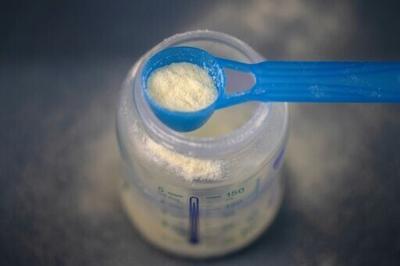
Two infant formula manufacturers withdrew batches from the market on Monday after France imposed stricter limits on acceptable levels of a toxin that can cause nausea, vomiting and diarrhoea.
French maker Popote said it was recalling two lots, while Vitagermine removed three different batches of Babybio formula from the shelves in the latest such recalls to rock the infant formula industry in recent weeks.
Several manufacturers, including European giants like Nestle, Danone, and Lactalis, have issued recalls of infant formula that could be contaminated with cereulide in more than 60 countries since December.
French authorities are investigating the deaths in December and January of two babies who were thought to have drunk possibly contaminated powdered milk. No link has been established so far between the formula and their symptoms.
The agriculture ministry on Friday set the new threshold at 0.014 micrograms of cereulide per kilogram of body weight, instead of 0.03 micrograms.
Vitagermine said its milk had complied with French rules until they changed last week, and it was removing the three batches on Monday to "better ensure the safety of infants".
Popote said it was removing two batches of first-stage infant formula "without waiting for the new European framework".
The European Food Safety Authority (EFSA) on Monday said its scientists had also suggested a maximum level for cereulide of 0.014 micrograms per kilogram of body weight.
This translated to 0.054 micrograms of cereulide per litre in infant formula, the Italy-based agency said.
"This advice is intended to help EU risk managers determine when products should be withdrawn from the market as a precautionary public health measure," it added.
- Cereulide health risk -
But European consumer association Foodwatch accused multinationals of focusing on thresholds as a "diversionary tactic".
"Cereulide should not be there at all in the first place," it said.
"It is illegal to market products that expose babies to health risks," it added, comparing cereulide to mouse droppings.
"There is no European standard on the presence of mouse droppings in infant formula. Nevertheless, it is prohibited," Foodwatch said.
The recall of potentially contaminated infant formula has heaped scrutiny on Chinese firm Cabio Biotech, the supplier of an ingredient used in infant formula which is suspected of being tainted.
Headquartered in the central Chinese city of Wuhan, Cabio Biotech is one of the world's largest producers of ARA, a fatty acid used primarily in baby formula and food products.
French company Nutribio told AFP it recalled some of its milk following an "alert" from Cabio Biotech.
French advocacy group Children's Health also named the company in a court filing, asking the government to order companies to pull all formula with ARA oil produced by Cabio Biotech.
Cabio Biotech has yet to publicly address allegations its ARA oil was contaminated, and has not responded to multiple requests for comment.
bur-jul/ah/ekf/rlp
Keep reading

Costa Rican President-elect Laura Fernandez on Monday welcomed guidance from El Salvador's gang-busting Nayib Bukele in her own country's fight against a surge in drug-related violence.

New York has counted 13 hypothermia-related deaths as the city faces an exceptional cold snap that swept large parts of the United States in late January, its mayor said Monday.

Supporters and opponents of Venezuela's government protested on Monday for better salaries and pensions, marching separately although united in their demand for a decent income.






(0) comments
Welcome to the discussion.
Log In
Post a comment as Guest
Keep it Clean. Please avoid obscene, vulgar, lewd, racist or sexually-oriented language.
PLEASE TURN OFF YOUR CAPS LOCK.
Don't Threaten. Threats of harming another person will not be tolerated.
Be Truthful. Don't knowingly lie about anyone or anything.
Be Nice. No racism, sexism or any sort of -ism that is degrading to another person.
Be Proactive. Use the 'Report' link on each comment to let us know of abusive posts.
Share with Us. We'd love to hear eyewitness accounts, the history behind an article.