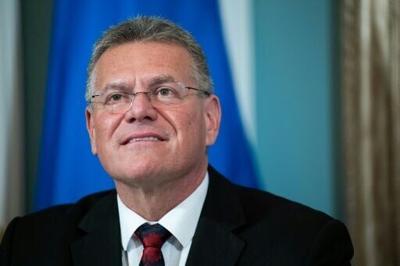
The EU is seeking more progress in easing the effects of US steel tariffs, its trade chief Maros Sefcovic said Friday, adding that talks are "going in a positive direction."
The bloc also wants to align approaches with the United States towards third countries when it comes to steel trade, he added.
With US Commerce Secretary Howard Lutnick, "we agreed to accelerate this work at a technical level," Sefcovic told reporters in Washington where he met with American counterparts.
His comments Friday came after discussions with Lutnick and US Treasury Secretary Scott Bessent. During his visit, he also formalized a critical minerals partnership with Washington.
But key issues remain in the transatlantic trade relationship.
While US President Donald Trump's administration recently simplified how its import tariffs on steel are applied, Sefcovic said: "We still have some issues with the remaining products which are listed."
"It would be very important to have positive traction on this," he added.
He noted that the United States benefits from imports of specialized machinery too, as it tries to boost domestic manufacturing.
But such imports can be challenging due to steeper costs and a lack of clarity on which rules apply.
"I'm glad that we reengage," Sefcovic said. "My feeling was that we are going in a positive direction."
Since Trump returned to the White House last year, European manufacturers have been hit by his sharp 50-percent tariff on steel and aluminum imports.
While Brussels and Washington clinched a deal last summer setting US tariffs at 15 percent for most EU goods, steel and aluminum products were not covered.
Sefcovic stressed Friday that the United States and European Union both face an issue of overcapacity in the market, recounting the EU's recent decision to double tariffs on foreign steel to shield its industry from cheap Chinese exports.
"As a next step, we want to launch work with the US on steel ring-fencing, aligning our approaches towards third countries," Sefcovic said.
This would help to build a "defensive mechanism against subsidized steel, against global overcapacities," he added.
bys/md
Keep reading

The latest developments in the Middle East war:
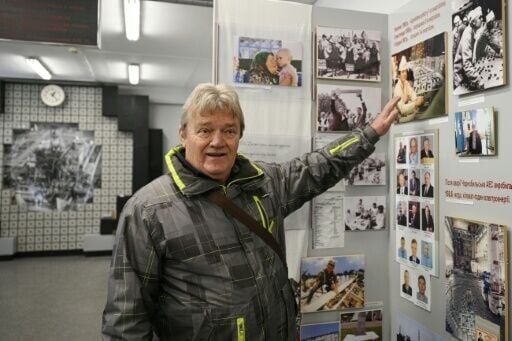
Nikolay Solovyov was on shift the night of April 26, 1986 when the Chernobyl nuclear power plant exploded. Instead of fleeing, he chose to fight his "first war" against radiation.
AI developers are ramping up efforts to win over the hearts and minds of officials in Europe and the United States, hoping to sway governments as they weigh high-stake regulatory frameworks for the ever more powerful technology.




(0) comments
Welcome to the discussion.
Log In
Post a comment as Guest
Keep it Clean. Please avoid obscene, vulgar, lewd, racist or sexually-oriented language.
PLEASE TURN OFF YOUR CAPS LOCK.
Don't Threaten. Threats of harming another person will not be tolerated.
Be Truthful. Don't knowingly lie about anyone or anything.
Be Nice. No racism, sexism or any sort of -ism that is degrading to another person.
Be Proactive. Use the 'Report' link on each comment to let us know of abusive posts.
Share with Us. We'd love to hear eyewitness accounts, the history behind an article.