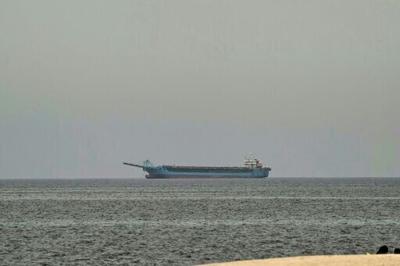
A Pentagon assessment said it could take six months to completely clear the Strait of Hormuz of Iranian-laid mines, which could keep oil prices high, the Washington Post reported on Wednesday.
Iran has all but blocked the vital waterway since the start of a war with the United States and Israel, sharply driving up oil and gas prices and disrupting the global economy.
The strait -- through which one-fifth of the world's oil and gas passes in peacetime -- has remained largely closed during a shaky ceasefire, with the US imposing its own blockade.
Even if hostilities end and the blockade lifts, it could take months to clear the waterway of mines, according to a Pentagon assessment, the Washington Post reported citing officials close to the discussion.
The assessment added that it was unlikely such an operation would begin before the end of the war.
The six-month estimate was shared with members of the House Armed Services Committee during a classified briefing, the Post reported.
Lawmakers were told that Iran may have placed 20 or more mines in and around the strait, some floated remotely using GPS technology which makes them harder to detect, according to the report.
AFP has contacted the Department of Defense for comment.
Pentagon spokesman Sean Parnell told the Washington Post that its information was "inaccurate."
Iran's Revolutionary Guards have warned of a "danger zone" covering 1,400 square kilometres -– 14 times the size of Paris –- where mines may be present.
Iran's parliament speaker said the Islamic republic would not reopen the strait as long as the US naval blockade remained.
A spokesman for German transportation giant Hapag-Lloyd cautioned last week that shippers needed details on viable routes as they remain fearful of mines.
When the Hormuz strait briefly reopened at the start of the ceasefire this month, only a few ships trickled through amid fears of attacks or mines.
Earlier in April, the US Navy said its ships transited the waterway to begin removing the mines, but that claim was denied by Iran's Revolutionary Guard, which threatened any military vessels attempting to cross the channel.
London hosted talks with military planners from over 30 countries starting Wednesday on a UK and France-led multinational mission to protect navigation in the Strait of Hormuz once hostilities end.
The "defensive" coalition is set to discuss plans to reopen the strait and conduct mine clearance operations.
aks/hol
Keep reading

The latest developments in the Middle East war:

An envoy to US President Donald Trump has asked world football's governing body FIFA to replace Iran with Italy at the World Cup, according to the Financial Times.

Sales of new cars jumped last month in the European Union as consumers turned to electric vehicles as petrol prices soared due to the war in the Middle East, data showed Thursday.




(0) comments
Welcome to the discussion.
Log In
Post a comment as Guest
Keep it Clean. Please avoid obscene, vulgar, lewd, racist or sexually-oriented language.
PLEASE TURN OFF YOUR CAPS LOCK.
Don't Threaten. Threats of harming another person will not be tolerated.
Be Truthful. Don't knowingly lie about anyone or anything.
Be Nice. No racism, sexism or any sort of -ism that is degrading to another person.
Be Proactive. Use the 'Report' link on each comment to let us know of abusive posts.
Share with Us. We'd love to hear eyewitness accounts, the history behind an article.